How To Get Rid Of Fruit Flies With Stuff You Already Own
 By Lisa Ben
·
October 22, 2026
·
9 min read
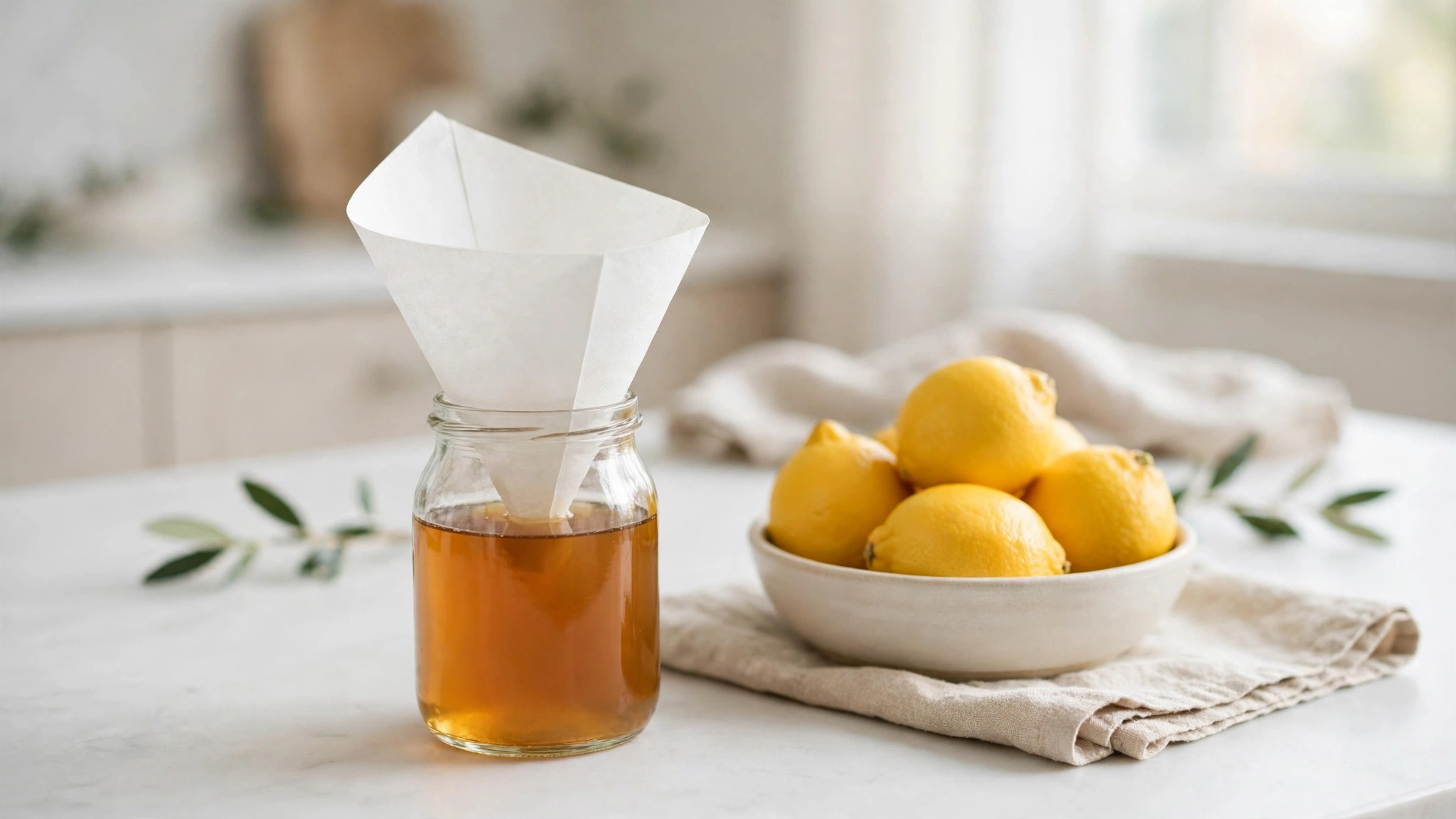
Every year, sometime around the first bowl of peaches, they arrive. One fruit fly on Monday, a small cloud by Friday, and me standing in the kitchen waving a tea towel like that has ever once helped. It has not. What ended them, the year I finally read up on what I was actually dealing with, cost nothing and used three things already in the cupboard: a jar, some vinegar, and a washing-up brush.
The method below is not about killing flies harder. It is about closing the nursery they are breeding in, then catching the adults while the nursery dries up. Skip the first part and you will be trapping flies forever, which I know because I did exactly that for two summers.
First, check they really are fruit flies
Three different little flies get called fruit flies, and the fix is different for each, so it is worth a minute of looking before you start pouring vinegar into jars. Fruit flies are small, tan-brown, and if you look closely, red-eyed. They hover in loose little clouds over the fruit bowl, the sink and the compost caddy, and they are hopeless fliers who drift rather than dart. If yours match that description, read on.
If the flies are dark, slightly fuzzy, and mostly found sitting still on the walls or tiles near a drain, those are drain flies, and they breed in the slime inside the drain itself. The drain scrub in step two below is your main weapon for them; traps will do almost nothing. And if the flies rise up out of a houseplant when you water it, those are fungus gnats living in the top of the compost. They need the soil to dry out between waterings, not a vinegar trap. Treating the wrong fly is the usual reason a "method that always works" does not.
Why swatting never wins
A fruit fly does not need your fruit bowl to be rotten. It needs something faintly fermenting and damp: the skin of a ripe banana, the dregs in a wine glass, the thin layer of slime inside a drain. The female lays her eggs on that surface, and in a warm kitchen the whole cycle from egg to flying adult takes roughly eight to ten days. Warmer room, faster flies.
That one fact explains the whole frustration. The flies annoying you today laid eggs days ago, and those eggs are sitting somewhere wet right now, on schedule to hatch whether you swat their parents or not. Every adult you catch is a small victory, but the production line is still running underneath. So the real job is not the adults. It is finding where the eggs are and shutting that down. Do that, and the adults become a mopping-up exercise that finishes within the week.
The numbers are not on your side either. A single female can lay several hundred eggs over her short life, in batches, on any surface that is damp and faintly sweet or sour. She is not fussy about where that surface is. It does not need to be a rotting peach; the wet rim of the compost caddy, the inside of a drain and the puddle ring under a washing-up sponge all qualify. This is why a kitchen that looks clean can still be running a nursery, and why the search below is less about fruit than about wet corners.
Step 1: Take away the nursery
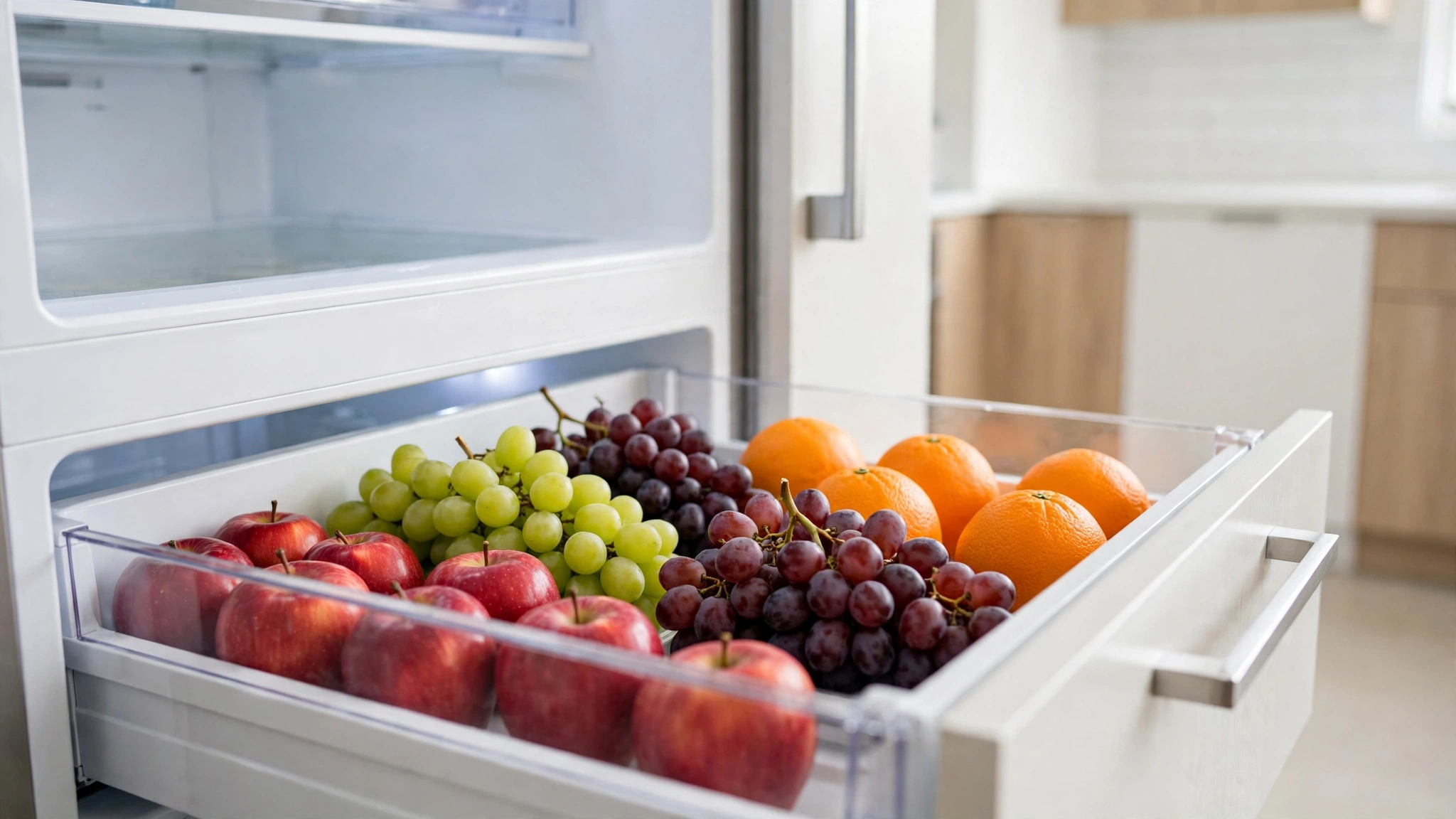
Start where they eat and breed, which is almost certainly your counter. Move every piece of ripe fruit into the fridge or a sealed box for the next week. Peaches and tomatoes will not love the fridge, I know, but a week of slightly less perfect peaches beats a kitchen full of flies, and they can come back out once the air is clear.
Then the less obvious sources. Empty the compost caddy completely, wash it with hot soapy water, and dry it, because the film left inside is a nursery all by itself. Rinse out recycling bottles and jars before they go in the bin, especially anything that held juice, beer or wine. And check the back of the vegetable cupboard for the classic secret source: a forgotten potato or onion that has quietly gone soft. I have found that sad onion behind the rice twice now. Twice.
Step 2: Scrub the drain, do not just pour things down it
The second nursery is the one most people miss, and it was my real problem all along: the inside of the sink drain. Just below the plug hole, the pipe walls carry a thin film of slime built from soap, food washings and coffee grounds. It is damp, it is fermenting gently, and to a fruit fly it is a perfect hotel. Your bath and shower drains can run the same hotel, which is why flies sometimes appear in a bathroom with no fruit in it at all.
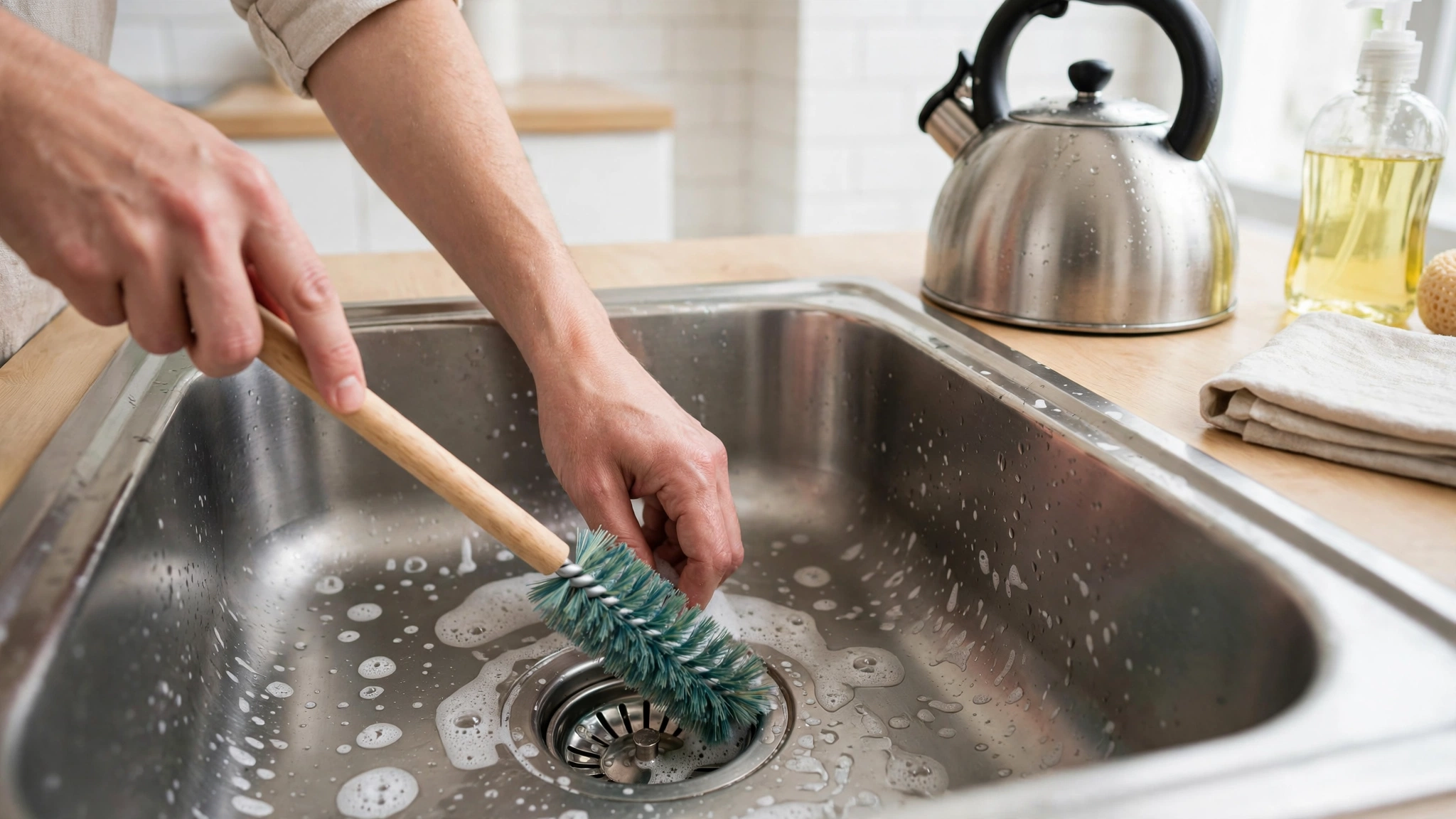
Pour a kettle of boiling water slowly down each drain first. Then take an old bottle brush or a washing-up brush and scrub properly around the drain opening, under the rim of the plug hole and as far down as the brush reaches. You will bring up greyish film, and that greyish film is the entire point. A cup of bicarbonate of soda followed by vinegar makes a satisfying fizz and is a decent scrubbing helper, but be clear about what is doing the work: it is the brush breaking up the film, not the fizz. Repeat the boiling water and the scrub every couple of days for a week, because the first pass rarely gets all of it.
Two spots get forgotten. The first is the overflow hole, that little slot near the top of the sink or bath, which has its own damp channel full of the same film and connects straight back to the drain. Push the brush in there too, or at least flush it with the kettle. The second is the stopper itself and whatever sits in the plug hole catching hair and soap; lift it out, scrub it, and put it back clean. In the bathroom, give the shower drain the same treatment, because trapped hair holds a film of its own.
Step 3: Set the trap
Now the adults. Pour a few centimetres of apple cider vinegar into a small jar or ramekin. Red wine or the last inch of a beer works too; plain white vinegar mostly does not, because it lacks the fruity fermenting smell they are hunting for. Add one drop of washing-up liquid and swirl it in. That drop matters more than the vinegar: it breaks the surface tension, so a fly that lands for a drink slips under instead of standing on the surface and flying off again.
Cover the jar with cling film pulled tight and pricked with a few pin holes, or roll a paper cone with a tiny opening at the tip and sit it in the jar. Both work on the same principle: easy to get in, oddly hard to find the way out. Set the trap exactly where the flies gather, which is usually beside the sink or where the fruit bowl used to live. If you still have the fruit bowl out for some reason, the trap cannot compete with it, so this step only works because step one happened.
The trap has one job: catch the adults before they lay the next round of eggs, while steps one and two make sure there is nowhere good left to lay them. Empty it, rinse it and refresh the vinegar every couple of days, because a trap full of old vinegar and dead flies stops smelling like fresh fermentation and starts being ignored.
Two small traps beat one big one. Put one by the sink and one wherever you actually see the cloud gathering. Fruit flies are lazy and stay close to home, so a trap in the wrong corner catches nothing and convinces you the method failed.
How long it honestly takes
Here is the timeline nobody selling a gadget will print. You should see clearly fewer flies in two to three days, and the kitchen should be more or less clear in about a week, because a week covers the eggs that were already laid when you started. It is days, not hours, and anyone promising an empty kitchen by tonight is selling you a trap and leaving you the nursery.
If they are still going strong after a week, do not start again from scratch. A source is still hiding somewhere, and it is usually one of these:
- The mop bucket or the damp mop standing in a corner
- The dishwasher filter and the rubber door seal, both quietly collecting food film
- The drip tray under the fridge
- A piece of fruit dropped under a sofa or behind the bin by a small person
- The overflow hole of the sink or bath, which nobody ever scrubs
Find it, clean it, and the week starts over from there. In my case, the second summer's mystery source turned out to be the dishwasher seal. I think about that seal more than I would like.
Keeping them away once they have gone
Prevention is dull, which is why it works. In the warm months, let fruit ripen in the fridge instead of the bowl, or keep the bowl small and use it fast. Wipe up juice and wine spills the same day they happen, not at the weekend. Give the compost caddy a hot wash once a week instead of waiting for it to announce itself. And keep the trap running for three or four days after the last fly disappears, because the last eggs hatch late and it is a shame to lose at the final fence.
The drains deserve a small standing habit too, because the film grows back on its own schedule. Once a month or so, a kettle of boiling water down the kitchen sink and a quick pass with the brush keeps the walls of the pipe too clean to be interesting. It takes four minutes, it needs nothing from the shop, and it is the difference between a kitchen that gets one stray fly in August and a kitchen that hosts the whole extended family.
The mistakes that keep them coming back
Only trapping, never removing the source
A trap beside an untouched fruit bowl and an unscrubbed drain is a hobby, not a solution. You will catch flies every day and have flies every day, because the eggs are still cycling. The trap is step three for a reason.
Pouring bleach down the drain and stopping there
Bleach runs straight down the middle of the pipe and barely touches the film on the walls where the eggs actually sit, then it is gone. It smells like decisive action, which is the trap of it. Hot water plus a brush, repeated, is less dramatic and considerably more effective.
Taking the trap away on day two
The first good catch feels like victory, so the jar goes in the wash and the remaining adults get a free week to repopulate the drain you just cleaned. Leave the trap out for the full week. Being bored of looking at it is not the same as being finished.
Questions I get asked about fruit flies
Are fruit flies actually harmful, or just annoying?
Mostly annoying, and they do not bite. The honest caveat is that they walk on bins and drains and then walk on your food, so they can carry bacteria from one to the other. Cover food while you have them, wash fruit before eating it, and treat them as a good reason to sort the kitchen out rather than a health emergency.
The little flies are around my houseplants, not the fruit. Will this work?
Probably not, because those are most likely fungus gnats, not fruit flies. Gnats breed in damp potting compost, so the fix is different: let the top of the soil dry out properly between waterings, clear any fallen leaves off the surface, and the numbers fall within a couple of weeks. A vinegar trap beside the plant will sit there catching nothing, looking hopeful.
Can I use white vinegar in the trap instead?
You can, and it will catch the occasional optimist, but apple cider vinegar works noticeably better because it smells like fermenting fruit, which is the whole attraction. The dregs of a bottle of red wine work just as well. Whichever you use, do not skip the drop of washing-up liquid; without it, most of your visitors land, drink and leave.
I have done all of this and they are still here after two weeks. What now?
Then a breeding source is still running somewhere you have not looked, and it is nearly always damp and forgotten rather than exotic. Work through the hiding list above, add any sink or drain that rarely gets used (a guest bathroom drain can host them happily), and scrub the overflow as well as the plug hole. If they survive that, take a photo and check the identification again, because drain flies need a deeper drain clean and will ignore everything in this post except the brush.
That is the whole of it: fruit away, drain scrubbed, trap set, and a week of patience. No sprays, no gadgets, nothing bought. Tell me in the comments where your hiding source turned out to be, because the dishwasher seal cannot be the strangest answer out there.
Lisa Ben
Lisa paints, builds, thrifts and rearranges her way through one very patient house, then writes down everything she learns here on Wazala. White paint is her favourite argument. New projects land every Tuesday, Thursday and Saturday, and the Sunday Letter rounds them up once a week.
You might also like

The Easiest Homemade Window Cleaner (And 3 More Mixes)
Four cleaners mixed from cupboard basics, including the window mix that does not leave streaks behind.
Read more →
How To Clean A Stainless Steel Sink Until It Shines
Water spots, dull patches and that grey film, gone with one paste and ten minutes of scrubbing.
Read more →
The Weekly Cleaning Schedule That Keeps A House Caught Up
Not a deep clean and not a rota carved in stone. A light weekly rhythm, room by room, that ends the weekend catch-up marathon.
Read more →