7 Plants That Survive Rooms With Almost No Sun
 By Lisa Ben
·
October 30, 2026
·
12 min read
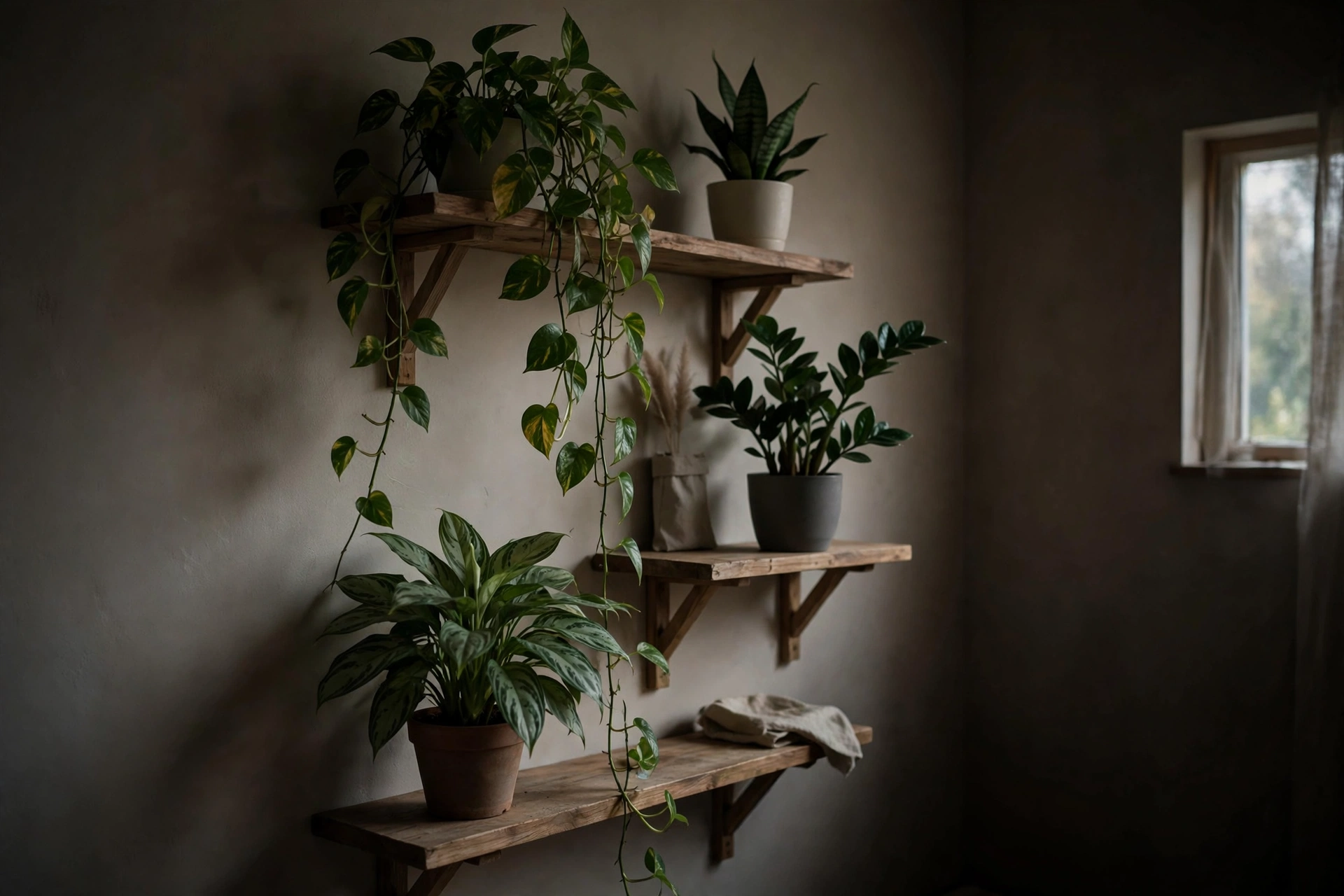
Every house has one: the hallway with no window, the bedroom that faces a brick wall, the corner of the living room the sun never reaches. Mine is the stretch of hallway by the stairs. Over the years I have put a fern there (dead in six weeks), a lovely trailing ivy (dead in two months) and one optimistic herb pot that I refuse to discuss. Then I stopped buying plants that wanted a greenhouse and started buying plants that could cope with my actual house.
The seven plants on this list are the ones that survived. Not in a plant-shop sense, where everything looks wonderful for a fortnight, but in the real sense: still alive, still decent-looking, a year later, in rooms where the sun barely visits. I will be honest about what each one can and cannot do, because the words "low light" on a plant label have ended more houseplants than any pest ever will.
What "low light" honestly means
Here is the part most plant lists skip. When a label says a plant tolerates low light, it means exactly that: tolerates. It will sit there, hold its leaves and not die. It will not grow fast, it will not flower, and it will not look like the lush photo on the tag. Tolerating is still a win in a dark room, but you have to go in knowing the deal, or you will water and fuss a perfectly fine plant to death trying to make it perform.
There is a simple test for whether a room is low light or just plain too dark. At midday, with the curtains fully open and the lamps off, sit where the plant will live and try to read a book. If you can read comfortably for ten minutes, every plant on this list can cope there. If you find yourself squinting and tilting the page towards the door, that spot is too dark for almost anything alive, and no label in the garden centre changes that. The honest answer for a truly lightless corner, like a windowless bathroom, is rotation, which brings me to the trick that does most of the work in my house.
The rotation trick that saves almost any plant
Buy two modest plants instead of one big one. One lives in the dark corner. The other lives somewhere brighter, a kitchen windowsill or the sunny end of a room. Every three to four weeks, swap them. The plant in the corner gets a month of real light to recharge, and the corner is never empty. Nothing about this is fancy, but it turns a spot where plants slowly fade into a spot where plants genuinely last.
Rotation works best when the pair roughly match, so the swap does not change the look of either spot: two pothos, two snake plants, a matched pair of Chinese evergreens. Keep the pots the same size and the whole thing takes five minutes, usually while I am carrying laundry past anyway. Every plant below holds up far better with rotation than without it. A couple of them, the cast iron plant and the snake plant, can manage a dark spot for months on end with no swap at all, which is why they sit at the top of the list.
The seven plants, honestly rated
They are in rough order of how much darkness they forgive, toughest first. For each one I have noted how it handles the light, how it wants watering, and the way it usually dies, because knowing the failure mode is what keeps you out of it.
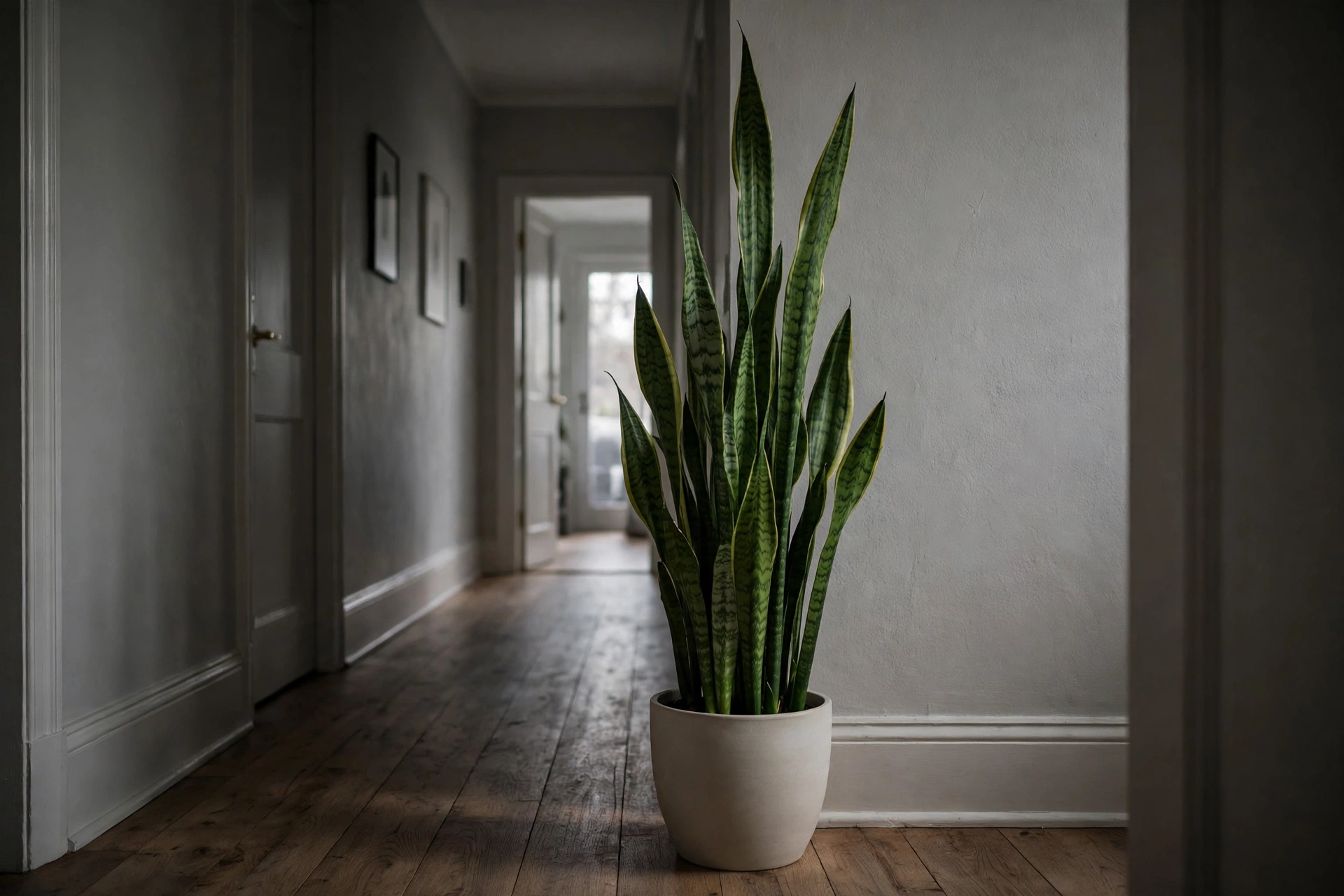
1. Snake plant Sansevieria
The one I hand to anyone who swears they kill everything. Those upright sword leaves store water, so the plant shrugs off both dim light and forgotten watering, a rare and forgiving combination. In a dark hallway it will grow slowly and the yellow edges on variegated types may fade towards plain green over time. That is the plant prioritising survival over decoration, and it is a fair trade. Water it only when the soil is dry all the way down, which in a dark room can mean once a month or less. How it dies: kindness. A well-meant weekly watering in low light rots the roots and the leaves go soft at the base. One note for pet homes: snake plant leaves are toxic to cats and dogs if chewed, so stand it somewhere out of reach.
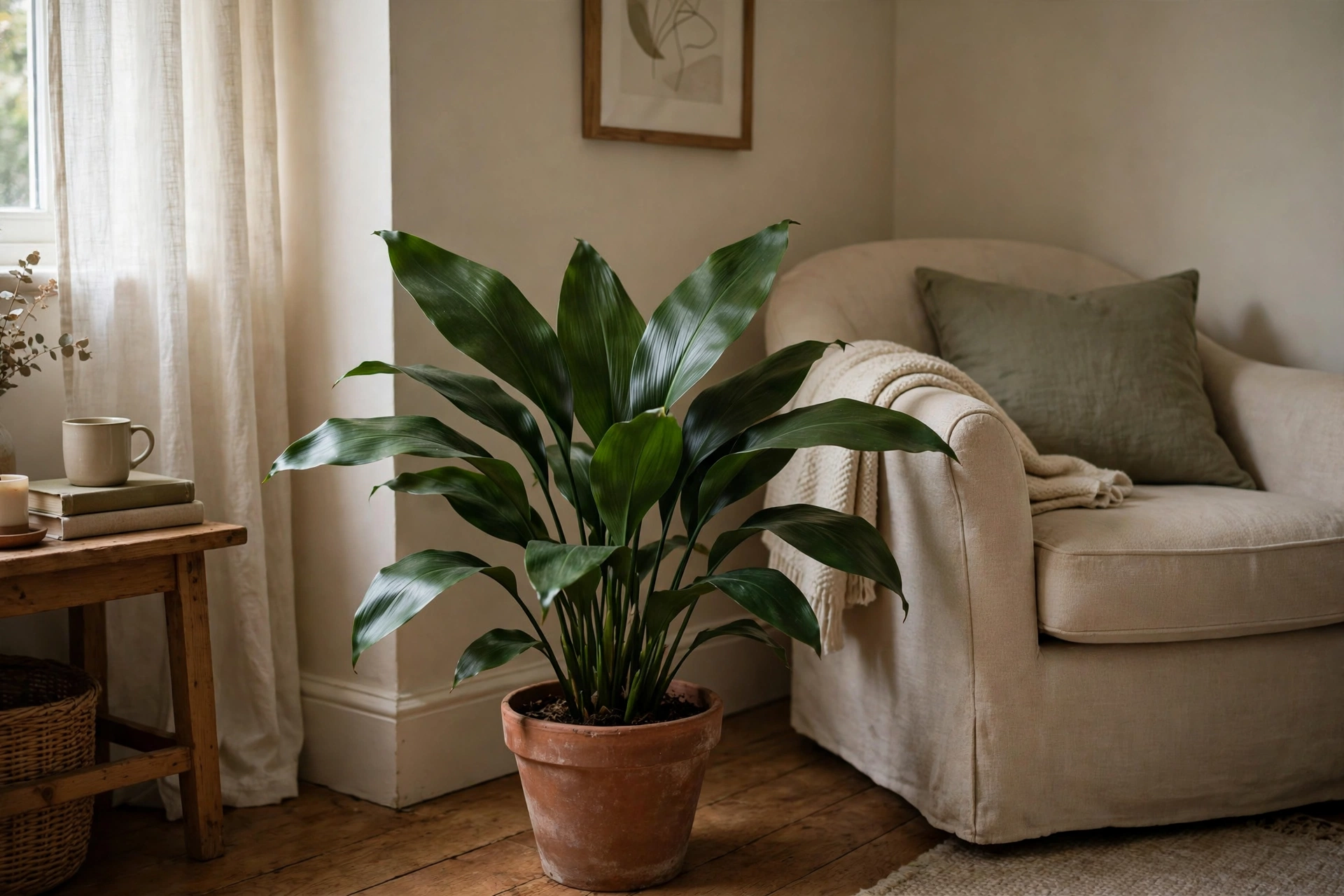
2. Cast iron plant Aspidistra elatior
The Victorians kept these in dark parlours heated by coal fires, and it is still the plant I trust most in the darkest corner I own. Broad, dark green leaves, slow and steady growth, and a tolerance for dim rooms, draughts and neglect that nothing else on this list quite matches. It will not do anything exciting. It will simply still be there, looking respectable, year after year, which in a north-facing room is exciting enough. Water when the top few centimetres of soil feel dry, and expect that to be every couple of weeks at most in low light. How it dies: soggy soil in a pot with no drainage hole, and direct sun, which scorches the leaves. It costs a bit more than the others, but you only buy it once.
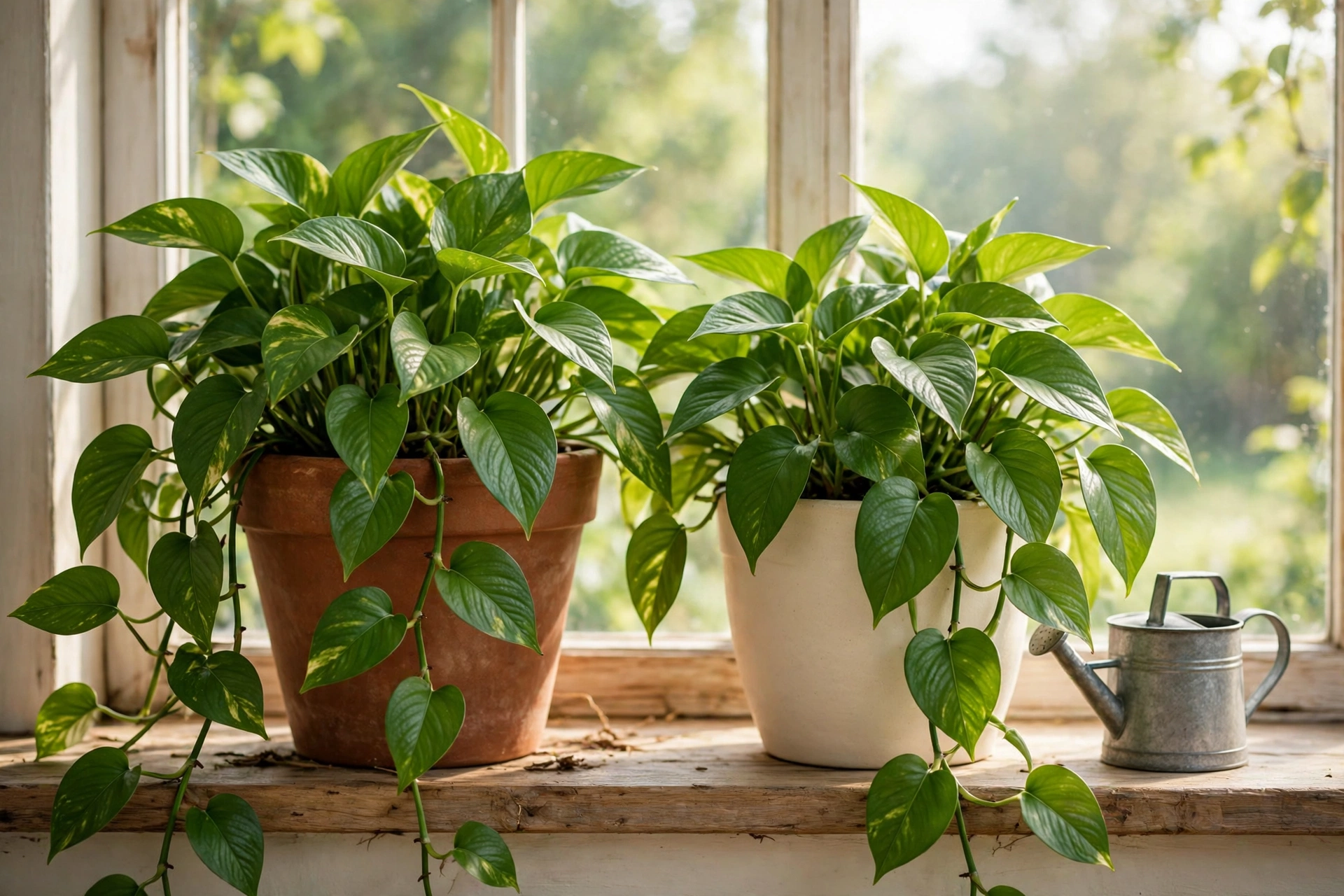
3. Pothos Epipremnum aureum
The trailing one for shelves and the tops of bookcases, where it can spill down a wall that gets nothing. Plain green pothos is the strongest choice for real darkness; the heavily variegated types, all cream and gold splashes, need more light to hold their pattern and will quietly revert to green in a dark room, which is the plant telling you the truth about your light levels. Let the stems trail or pin them along a shelf. Water when the leaves just begin to look a little soft and the soil is dry a finger's depth down. How it dies: a pot that sits in a saucer of water, and stems left sitting in stale water on a shelf. Pothos is also toxic to pets if eaten, so trail it high, out of chewing range. If you fall for it, my pothos propagation guide turns one plant into a whole shelf of them.
4. ZZ plant Zamioculcas zamiifolia
Glossy leaflets on strong stems, and underground it keeps thick rhizomes, a built-in pantry of water and food that lets it coast through dark spells and dry ones. A ZZ in low light is a statue of a plant: it may push out one new stem in a season, and that is fine, because the stems it has stay shiny and upright for a very long time. Water sparingly, every three to four weeks in a dim room, and only when the soil has dried right through. How it dies: overwatering, again. The rhizomes rot in wet soil, a stem yellows and topples, and by then the damage is done. If you are a chronic over-waterer, put this one on your desk where you can admire it and leave it alone.
5. Peace lily Spathiphyllum
The one flowering plant on the list, with a catch you deserve to hear plainly: in low light, a peace lily gives you handsome green leaves and usually no flowers. The white blooms need brighter light to form. If you are happy with it as a foliage plant, and I am, it copes well in dim rooms and it is wonderfully honest about thirst, drooping dramatically when dry and perking up within hours of a drink. Keep the soil lightly moist rather than wet, which in a dark room still means watering less often than you think. How it dies: being left bone dry for weeks, or sitting in a cold draught by a door. And a factual note: peace lilies are toxic to cats and dogs, so keep this one on a shelf or table they cannot reach.
6. Chinese evergreen Aglaonema
The prettiest option for a dark room, with leaves patterned in silver and green. Stay with the green and silver types for low light. The pink and red varieties that fill the shops now are bred for bright conditions and fade to a washed-out green in the dark, which wastes your money and disappoints everyone. Chinese evergreens like steady warmth, so a dim but warm living room suits them better than a cold hallway. Let the top of the soil dry between waterings, roughly every ten days to two weeks in low light. How it dies: cold. A chilly windowsill in winter or a spot beside a door that opens all day will spot and yellow the leaves faster than darkness ever will.
7. Heartleaf philodendron Philodendron hederaceum
Often confused with pothos, and just as forgiving, with softer heart-shaped leaves on trailing stems. It tolerates low light well and grows a touch faster than pothos in the same dim spot, so it fills a shelf or a hanging planter sooner. The trade-off is that growth gets leggy in very low light, long stems with small leaves spaced far apart. Pinch the stem tips now and then to keep it bushy, and rotate it into better light for a month when the legginess starts to show. Water when the top few centimetres are dry. How it dies: the same old story, wet feet in a pot that cannot drain, plus being forgotten somewhere so dark it fails the reading test. Within the rules, it is hard to kill.
Watering rules for dark rooms
If you take one section of this post to heart, take this one. Plants in low light drink slowly. The leaves get less sun, so they use less water, and the soil stays damp far longer than it does on a windowsill. Almost every low-light plant death I have seen, including my own fern, was not darkness. It was water, given on a schedule meant for a sunnier room.
- Check deep, not at the surface. Push a finger or a wooden skewer 5 cm into the soil. If it comes out damp or with soil clinging to it, walk away and check again in a few days.
- Pots must drain. Every pot on this list needs a drainage hole. If the pretty outer pot has none, keep the plant in its plain inner pot, water it at the sink, let it drain fully, then put it back.
- Empty the saucer. A plant standing in leftover water is a plant with rotting roots on a timer. Tip saucers and cover pots dry after every watering.
- Less food, too. A plant barely growing barely eats. Feed at half strength a couple of times in spring and summer, and not at all in winter.
- Expect long gaps. In a dark room in winter, some of these plants want water once a month. That feels wrong. It is right.
What to skip in a dark room
Honesty cuts both ways, so here is the list of plants I no longer buy for dim spots, however good they look in the shop. Kitchen herbs like basil and rosemary want a sunny windowsill and go leggy and pale anywhere else. Succulents and cacti are desert plants; in low light they stretch into sad, floppy versions of themselves and then rot. The fiddle leaf fig, the cover star of a thousand bright living rooms, drops its leaves in protest in a dark corner. String of pearls, olive trees and most flowering plants belong on the same list. None of this makes them bad plants. It makes them the wrong plants for that corner, and the corner always wins in the end.
A quick word on pets: three plants on this list, snake plant, pothos and peace lily, are toxic to cats and dogs if chewed. That does not rule them out of a pet home, but it does rule them in to high shelves, hanging planters and rooms the pets do not use. The cast iron plant and Chinese evergreen are the safer bets for floor level, and if a pet does eat anything on this list, a vet call is the right move, not a wait-and-see.
Questions I get asked about low-light plants
Will any plant survive in a windowless bathroom?
Not permanently, no. A windowless room fails the reading test at every hour of the day. What does work is rotation: keep a snake plant or pothos in there for three to four weeks at a time, then swap it for its partner from a bright room so it can recover. The humidity from showers is a genuine bonus, but humidity is not light.
How long can a plant stay in low light before it needs a break?
For most of the plants on this list, three to four weeks in the dark spot, then a month somewhere brighter, keeps them in good shape indefinitely. The cast iron plant and snake plant can go two or three months without a swap. The peace lily and philodendron show the strain soonest, with smaller new leaves and longer gaps between them.
Why is my snake plant going soft and mushy at the base?
That is root rot, almost always from watering too often for the light it gets. A snake plant in a dim room may need water once a month, not once a week. Take it out of the pot, cut away any soft black roots and mushy leaves, let the cuts dry for a day, then repot into fresh dry soil and wait a full week before watering lightly. Firm, upright leaves will not come back once they have gone soft, so it is a rescue, not a cure.
Can I just use a grow light in the dark corner?
Yes, and it genuinely changes the maths. A simple LED grow bulb in a lamp you already own, on for ten to twelve hours a day, lifts a dark corner into medium light, and then even the fussier plants on the skip list become possible. It is the one shortcut that actually works. It is not free light, though: run it on a timer, or the day you forget for a week is the day the experiment ends.
Start with one corner and one honest plant, a snake plant or a cast iron if the spot is truly dim, and learn what your room can do before you fill it. Dark rooms are not plant-proof, they are just picky. Tell me in the comments which corner of your house defeats every plant, and I will tell you which of the seven I would try there first.
Lisa Ben
Lisa paints, builds, thrifts and rearranges her way through one very patient house, then writes down everything she learns here on Wazala. Her hallway has no window and, at last count, four living plants. New projects land every Tuesday, Thursday and Saturday, and the Sunday Letter rounds them up once a week.
You might also like
Propagate Pothos: Turn One Plant Into Twelve
The cutting method that actually works: where to snip, rooting in water, and potting up.
Read more →
Small Living Room Layouts: 6 Arrangements For Tight Spaces
Six ways to arrange a small room so it feels calm instead of cramped.
Read more →
17 DIY Shelf Ideas For Every Room
Floating, bracketed, ladder and crate shelves, with the honest cost of each.
Read more →