A Small Balcony Makeover On A Shoestring Budget
 By Lisa Ben
·
October 30, 2026
·
11 min read
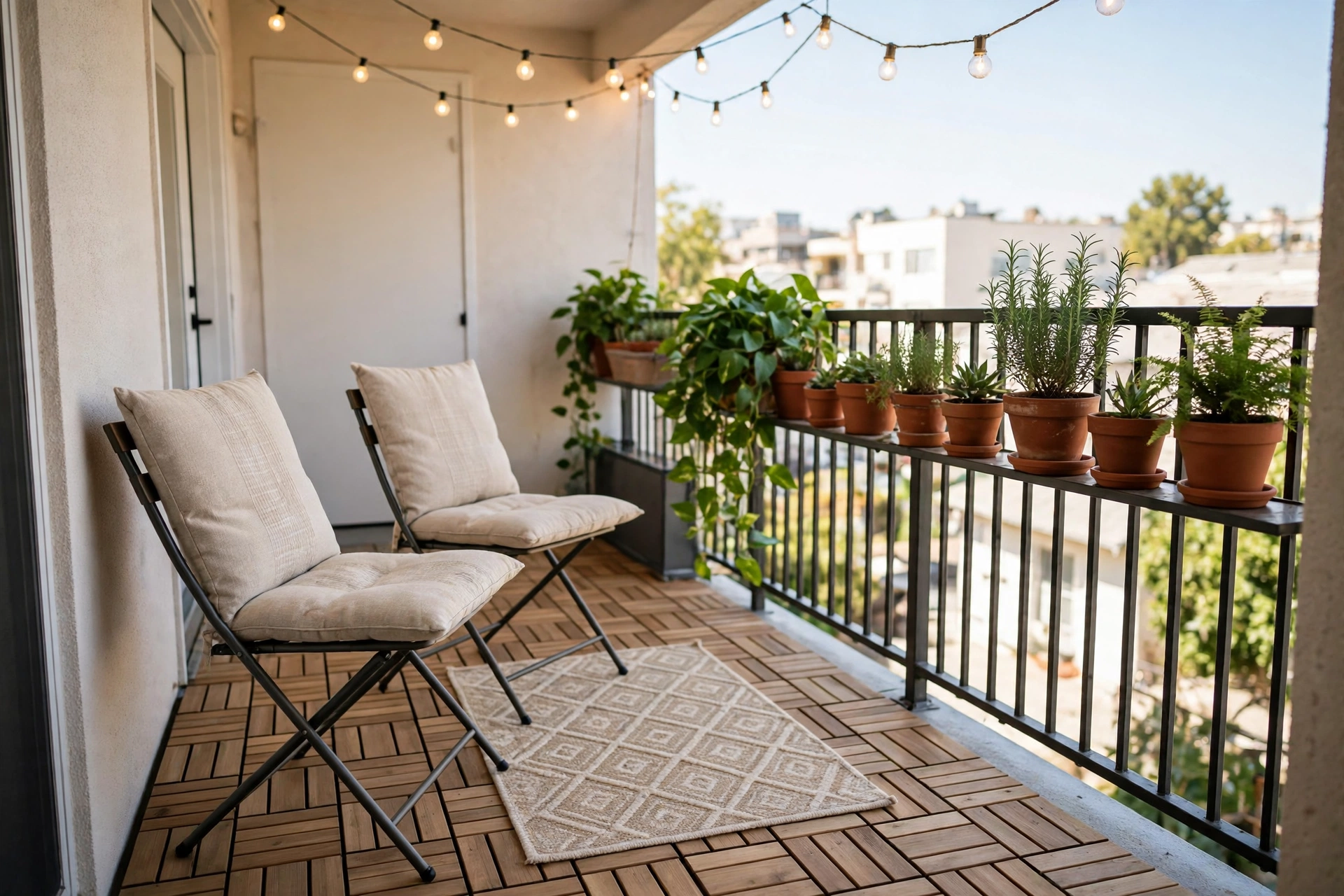
For two years my balcony was where things went to be forgotten. A broken chair. A bag of compost that never made it to a pot. Paint tins from the hallway project. The space itself is tiny, barely wide enough for two chairs, and I had decided it was too small to bother with. Then a friend came round on a warm evening, carried her mug out there, and sat on the upturned paint tin because there was nowhere else. That was the moment. A balcony you can sit on with a coffee is a whole extra room, and it does not need a big budget. It needs an order of work, and a bit of honesty about what a small outdoor space can actually hold.
Here is the exact order I followed, what I would spend on first, and the mistakes I made so you can skip them. The total spend stayed small because most of it went on two things, the floor and the seats. Everything else was rearranging, second-hand finds and plants.
Step zero: empty it, sweep it, check the rules
Every makeover post starts with buying things. This one starts with a bin bag. Take everything off the balcony, all of it, even the things that are definitely staying. Sweep it, wash the floor down, and look at the bare space with fresh eyes. Mine was bigger than I remembered once the clutter went, and yours probably is too. This is also when you find the truth about the floor: the stain that was hiding under the compost bag, the cracked tile, the corner where water sits after rain.
Then check the rules before you spend a single coin, because balconies have more rules than any other part of a home. If you rent, your agreement may ban fixings into the walls or the railing, and some buildings limit what can hang on the outside of the rail at all. Weight matters as well. A big pot full of wet soil is far heavier than it looks, and a row of them along one edge adds up. Keep heavy pots spread out and close to the wall rather than lined up at the far edge. Last, look at the drainage. Balcony floors slope, gently, so rain runs to a drain or an edge. Find out where your water goes before you cover the floor with anything, and never block that drain. Everything in this project is freestanding or tied on, nothing is drilled, and that is deliberate. It keeps landlords calm and it means the whole thing can come apart in an afternoon.
Measure it and give it zones
Small spaces fail when every item is fighting for the same square metre. So measure the balcony properly, write the numbers down, and sketch three zones on paper, even if the sketch is rough. Mine were simple. A sit zone: two chairs and somewhere to put a mug. A grow zone: the railing and one corner for plants. A store zone: one box, in the corner by the door, for cushions and the watering can.
Two measurements matter more than the rest. The door swing, because a chair that blocks the balcony door will annoy you every single day. And a walking strip, roughly a chair's width, from the door to the far end, so you can get out there with a full watering can without turning sideways. If a piece of furniture does not fit its zone on paper, it does not come home from the shop. That one rule saved me from a lovely bench that was, on measuring, eleven centimetres too long.
Floor first, because it changes everything
A washed concrete slab makes even good furniture look temporary. Covering the floor is the single change that turns a balcony from storage into a room, which is why it gets the first money. Start with a proper wash: hot water, a stiff brush, and patience with the corners. You may find the floor underneath is fine as it is, in which case you have just saved the biggest cost in the project.
If it is not fine, you have two cheap routes. An outdoor rug is the fastest. Choose one made for outside, flat-woven rather than fluffy, so it dries quickly and does not hold water against the floor. The other route is interlocking deck tiles, the kind that click together and lift out again. They feel warmer under bare feet and hide a stained slab completely. My one warning, and it matters: anything flat laid on a balcony floor can trap damp against the wall and the slab beneath it. Whatever you choose, lift it every month or so, let the floor dry, and check that water still runs to the drain the way it should. Ten minutes, four times a summer. Cheap insurance.
Seating on a shoestring
Comfort is the whole point of the balcony, so this is where the rest of the real money went. New outdoor furniture is pricey and, in my experience, the cheap new sets are the worst of both worlds: flimsy, and too big. Second-hand is the sweet spot. I found two folding chairs with sound frames and tired fabric, cleaned them up, and added proper outdoor cushions, which is where the comfort actually lives anyway.
Before you buy any second-hand chair, do three checks. Sit on it and shift your weight; a folding chair that creaks and twists is done, whatever the seller says. Look at the joints and hinges for rust, especially underneath. And fold it flat. Fold-flat matters more than people think, because winter is coming for every balcony, and seating that folds can live in a hallway cupboard instead of rotting outside. If you have the width, a bench with a storage box under the seat is the hardest-working piece you can buy, since it seats two and swallows the cushions. No room for either? Thick floor cushions on the rug, with your back against the wall, beat a wobbly bargain chair every time. Buy the seat you will actually sit in for an hour, not the one that photographs well for a minute.
Plants in layers, and one safety rule
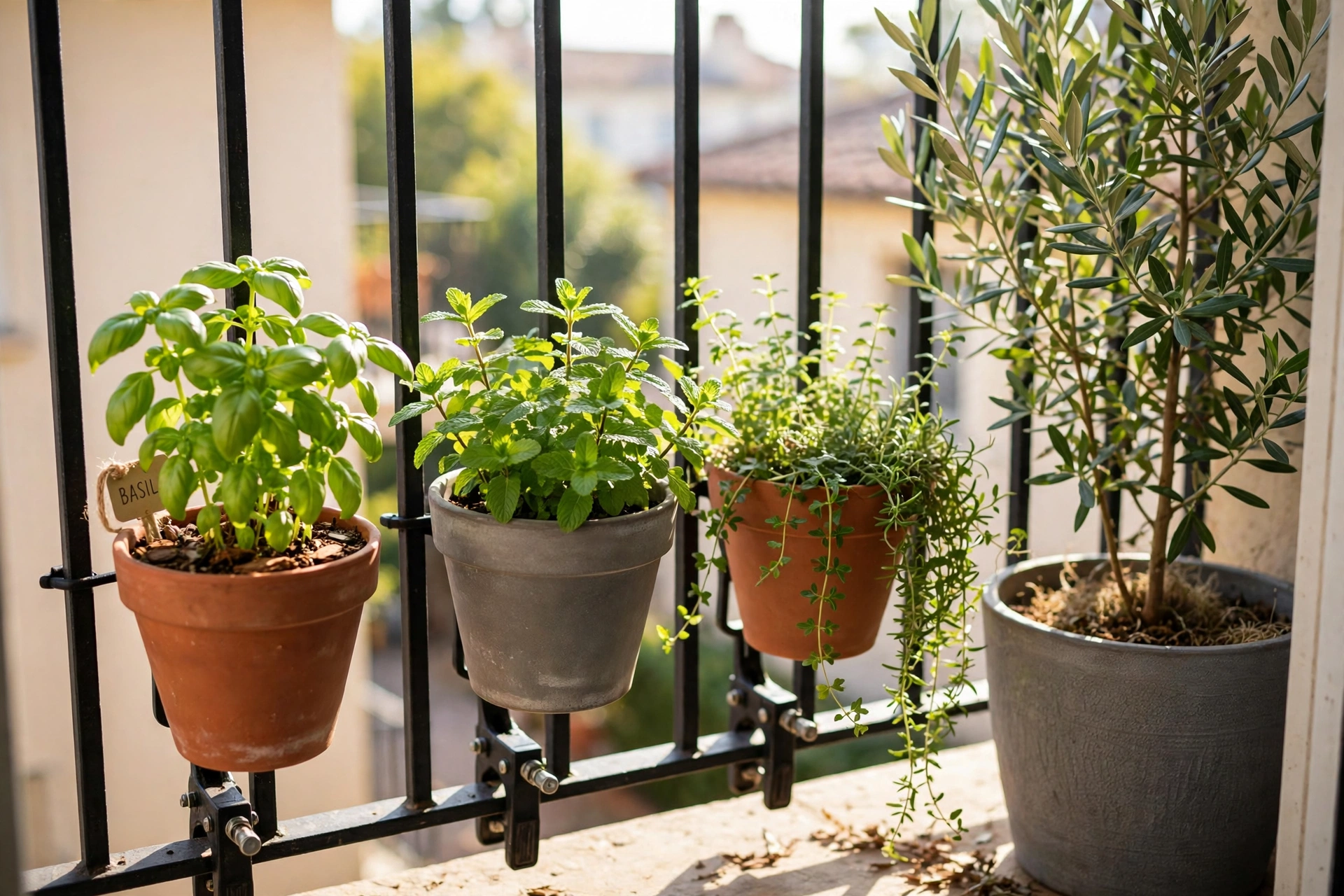
Plants are where a small budget goes furthest, but only if you plant in layers instead of lining up a row of little pots like soldiers. Think in three heights. Tall at the back: one big plant in one big pot, which gives you privacy from the neighbours and a green wall to look at. Middle: your railing planters and medium pots. Low: something trailing over an edge to soften the hard lines.
Here is the safety line, and I do not soften it. Every pot gets secured, properly, with the planter's clamps or brackets fitted as the maker intended. Nothing balances on top of the rail, and nothing hangs on the outside of it on my balcony. A falling pot from even one floor up can do real harm, and wind on a balcony is stronger than wind at ground level. If a planter wobbles when you tug it, it does not stay. Full stop.
For what to plant, follow the sun you actually have, not the sun you wish you had. Watch the balcony for a day before buying. Herbs like basil, mint and rosemary are brilliant value where the sun lands for a good stretch: cheap, fast, and you eat them. Put mint in its own pot, because it will take over any shared space with great enthusiasm. In shade, ferns and ivy cope far better than hopeful sun-lovers. And the budget tip that changed my balcony more than any other: one big pot beats six small ones. One big pot holds more soil, dries out slower, looks calmer, and costs less than six little pots with six little plants gasping in them. Small pots are also the first thing the wind knocks over. Big and heavy is your friend out here.
Privacy and shade, cheaply
Most small balconies are overlooked, and feeling watched is the fastest way to stop using one. The cheapest fix I know is a roll of reed or bamboo screening, tied to the inside of the railing with cable ties or twine. It takes twenty minutes, costs very little, needs no fixings into anything structural, and you can still see out over the top while sitting down. From the chairs, the neighbours vanish. That is the test: screen to seated eye height, not to the sky.
For shade, a small shade sail or an outdoor curtain on the windward side both work, but respect the wind. Anything that catches the breeze becomes a sail in the honest sense, so fix shade to proper points, keep it taut, and take it down when a storm is forecast. A curtain on a tension wire is the gentler option: it billows instead of fighting, and you can slide it open on calm evenings. I went with screening plus a curtain, and between them the balcony stopped feeling like a stage.
Light, honestly
Solar string lights are the one piece of decor I will defend to anyone. They cost little, need no wiring, charge themselves on the windowsill if the balcony is shady, and they make the space usable after dark, which doubles the value of everything else out there. String them along the railing or under the screening line rather than across the middle of the space, where they will meet your head every time you stand up.
The honest note: solar lights give a glow, not working light. You can find your mug by them. You cannot read small print or thread a needle by them, and on a run of grey days they will be dim by nine in the evening. If you want to read outside, one rechargeable lantern on the storage box does that job properly. Set the expectation right and the string lights never disappoint.
One box of storage
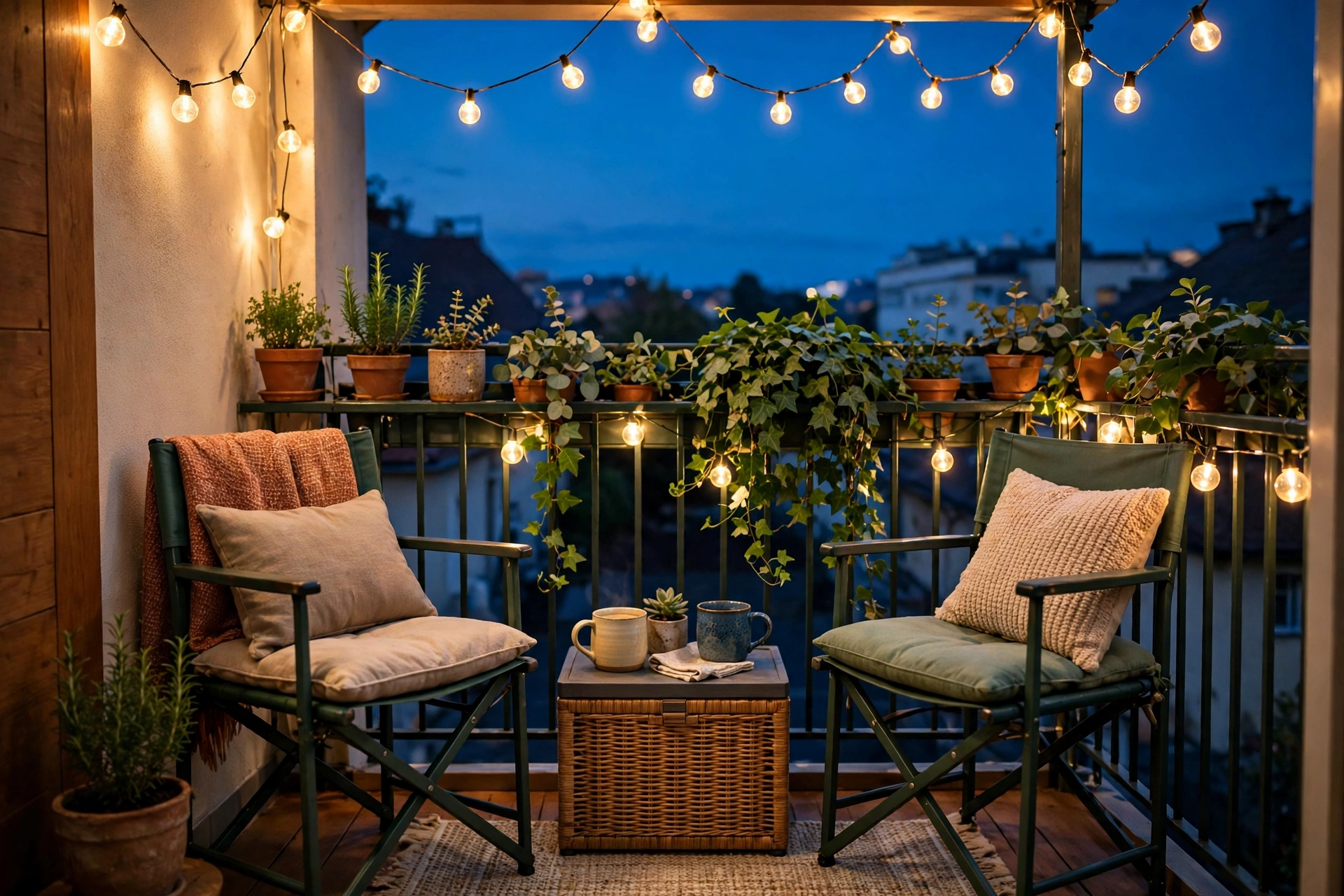
A balcony with nowhere to put things will drift back into being a dumping ground, because cushions, a watering can and a pair of secateurs have to live somewhere. One lidded box in the store zone solves it. The lid matters: it keeps the rain off the cushions and, closed, the box becomes a side table or a footrest. Mine holds both cushions, the watering can and a folded blanket, and its top has held more mugs and plates of toast than any surface in the flat. Measure your store corner before buying, keep the box the smallest size that swallows the cushions, and you are done.
Where the money should go
On a shoestring, the order you spend matters more than the amount. Roughly half of my budget went on the floor covering and the seats together, because those two decide whether you use the balcony at all. Plants came next, around a third, weighted towards the one big pot and the herbs. Everything else, the screening, the lights, the box, shared what was left, and the purely pretty things came last and mostly came second-hand.
My rule: if you can only afford one thing this month, buy the seats. A rug can wait, plants can be grown from a friend's cuttings, but nobody lingers on a balcony with nowhere decent to sit.
The little care routine that keeps it nice
A balcony stays lovely on about ten minutes a week. In hot weather, pots dry out fast, small ones daily and the big one every two or three days; water in the morning or evening, not at midday, and water the soil rather than the leaves. Cushions come in when rain is coming and live in the box the rest of the time, which is exactly why the box has a lid. Once a month, lift the floor covering, sweep underneath, and check the drain is clear. After any big storm, walk the railing and tug every planter once. That is the whole routine, and it is the difference between a makeover that lasts one summer and one that lasts five.
Mistakes I made, so you do not have to
Buying decor before seating. My first attempt at this balcony, two years ago, spent the whole budget on pots, a lantern and a pretty throw, and I still had nowhere to sit. The pretty things sat in a corner and the balcony stayed storage. Seats first. Always.
Pots without drainage holes. A bargain pot with no hole in the bottom is not a pot, it is a bucket, and roots sitting in water rot quietly until the plant gives up. Check every pot before it leaves the shop. If a decorative pot has no hole, use it as an outer cover with a plain drained pot inside, and empty the spare water after heavy rain.
Ignoring the wind. My first week, a gust took a light empty pot across the balcony and nearly off it. Light things live low and heavy, tall plants go in the sheltered corner, and everything on the rail is clamped. Balconies are wind tunnels with a view. Dress them accordingly.
Questions I get asked about balcony makeovers
I rent. Can I do any of this without drilling?
Yes, all of it. This makeover uses no drilled fixings at all: screening ties to the inside of the railing, planters clamp on with their own brackets, deck tiles and rugs simply lie on the floor, and the seating and storage box are freestanding. Check your rental agreement for anything about the outside of the railing, and keep everything on the inside to be safe.
How much can a balcony hold? Should I worry about weight?
Treat weight with respect rather than fear. The heavy items are big pots of wet soil, so keep them against the wall side of the balcony rather than at the far edge, spread them out instead of clustering them, and favour one big pot over a wall of them. If your balcony is old, damaged or you are planning anything heavier than pots and two chairs, get it checked before you load it.
My balcony is shady all day. Is it worth doing?
Completely. Shade is the easier problem. Skip the sun-hungry herbs and go for ferns, ivy and other shade-happy plants, lean harder on cushions, a blanket and the string lights, and you get a cool green corner that is at its best exactly when a sunny balcony is too hot to sit on. Solar lights charge on a bright windowsill indoors if the balcony never sees the sun.
What happens to it all in winter?
This is why the fold-flat test matters. Chairs fold and come indoors or under a cover, cushions live in the storage box or a cupboard, and tender plants either come in or get swapped for hardy evergreens that earn their place all year. The rug and tiles lift in ten minutes if you want them stored, and the screening stays up. Come spring, the whole room goes back together in an afternoon.
Empty it, check the rules, floor and seats first, then plants in layers and light last. That order turned my dumping ground into the seat everyone in this flat argues over. If your balcony is even smaller than mine, tell me its measurements in the comments and I will help you zone it.
Lisa Ben
Lisa paints, builds, thrifts and rearranges her way through one very patient house, then writes down everything she learns here on Wazala. The balcony is her favourite room from May to September. New projects land every Tuesday, Thursday and Saturday, and the Sunday Letter rounds them up once a week.
You might also like
How To Paint Your Front Door (And Pick The Colour)
Prep, the finish that survives weather, and testing a bold colour first.
Read more →
Propagate Pothos: Turn One Plant Into Twelve
Free plants for the railing and the shelf, from one leggy pothos and a pair of scissors.
Read more →
Small Living Room Layouts: 6 Arrangements For Tight Spaces
The same zoning trick, indoors: six layouts that make a small room sit properly.
Read more →