The Easiest Homemade Window Cleaner (And 3 More Mixes That Earn Their Bottle)
 By Lisa Ben
·
October 24, 2026
·
12 min read
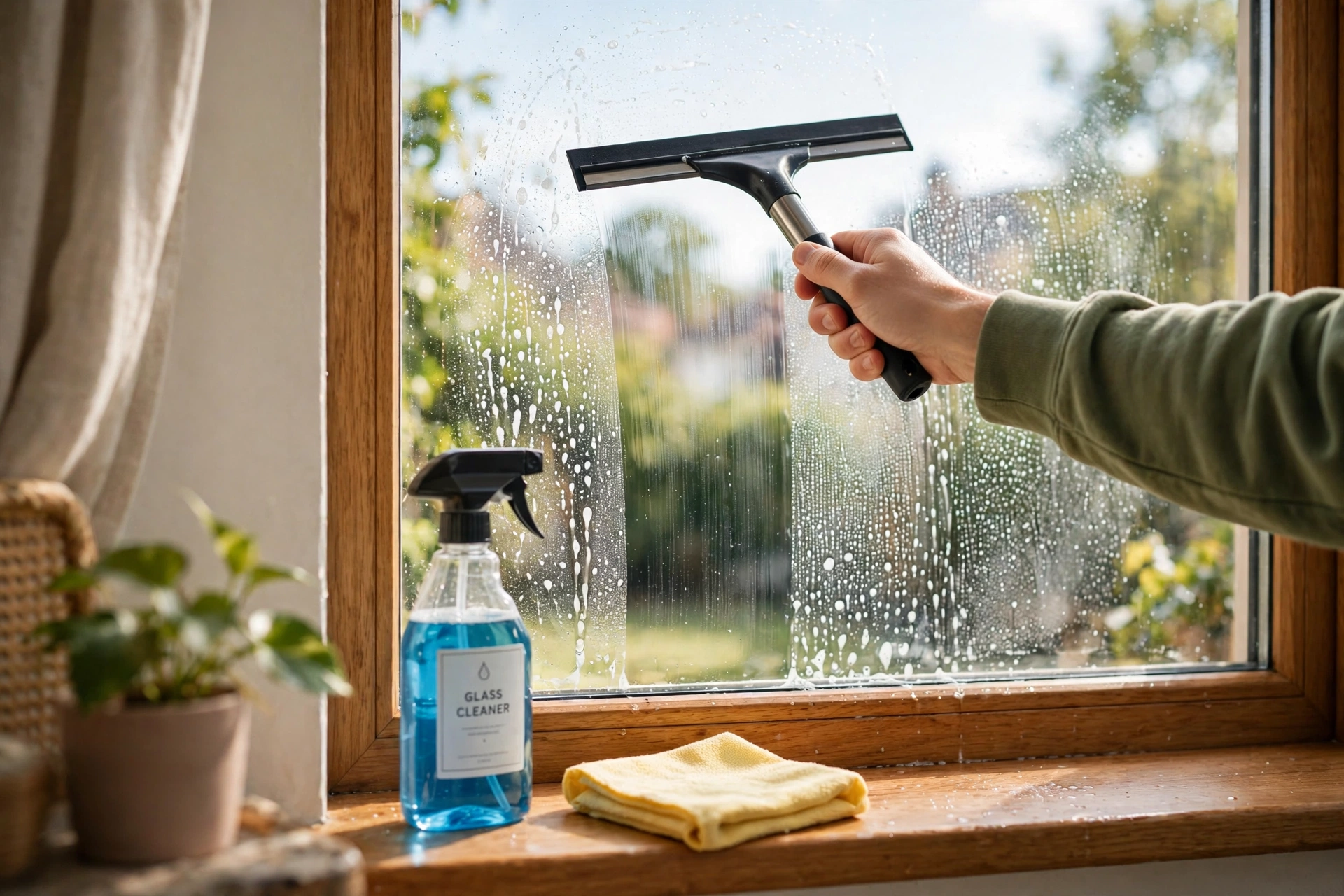
For years I bought the blue spray. You know the one: it promises a streak-free shine, costs more than the glass in my windows probably should, and still left me polishing the same corner four times while the sun showed up every smear. One spring, mostly out of stubbornness, I mixed my own in an old spray bottle and waited for it to be worse. It was not worse. It was better, and the reason had almost nothing to do with the recipe.
These days there are exactly four homemade cleaners under my sink, and each one keeps its place by being used every week. The window cleaner is the star, so it gets the full treatment here: the recipe, and then the technique, because technique is honestly where streak-free windows come from. I will also tell you plainly what each mix cannot do, because a cleaner you trust too much is worse than one you do not trust at all.
Before you mix anything: the safety rules
Homemade does not mean harmless. These are kitchen ingredients, but mixed wrongly or stored carelessly they can still hurt someone. Read this box first, every rule in it matters:
- Never mix bleach with vinegar, and never mix bleach with ammonia. Either pairing creates a toxic gas that can seriously damage your lungs. If a surface has had bleach on it, rinse it well with plain water and let it dry completely before you use any mix in this post on it.
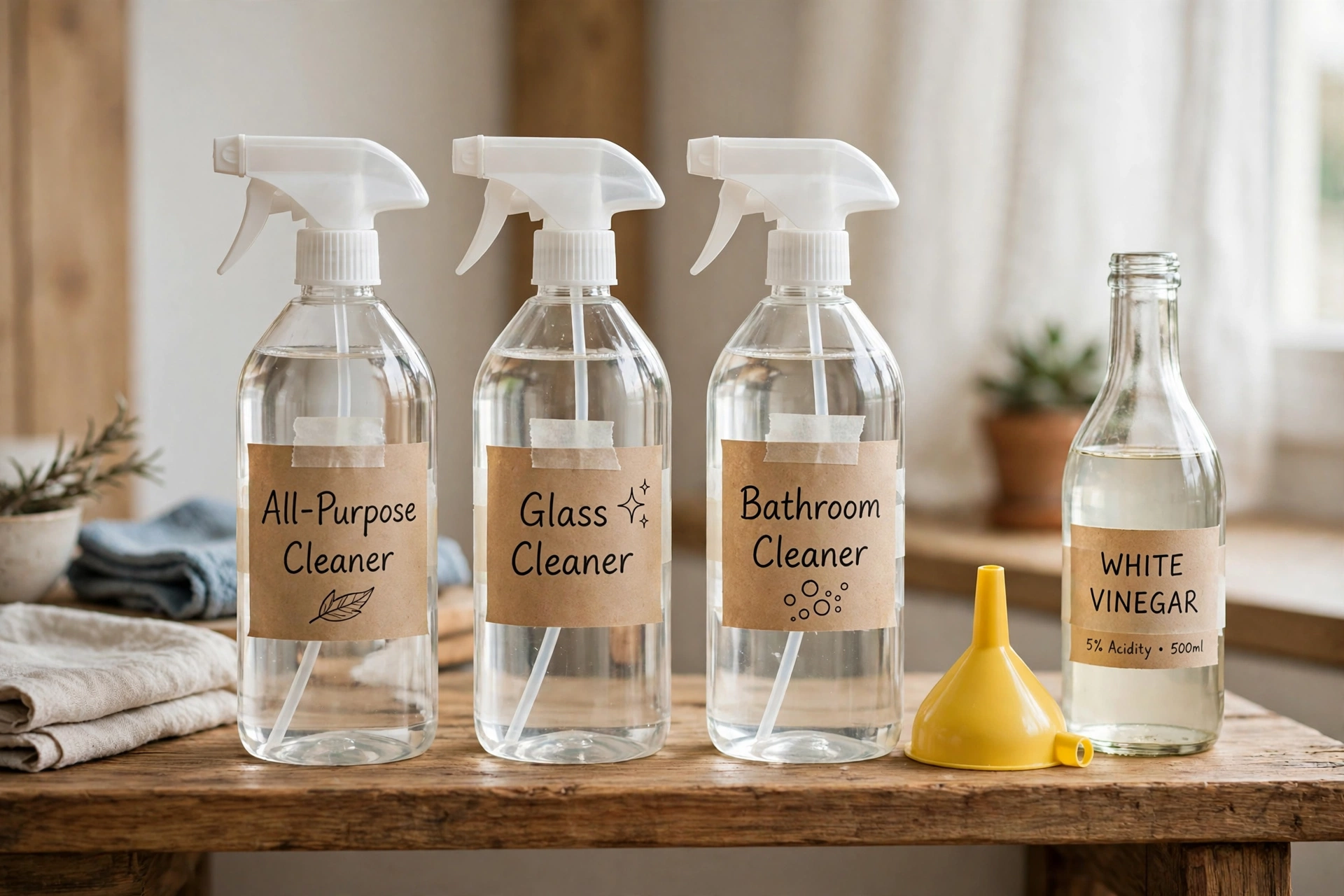
- Label every bottle the moment you fill it. Write what is inside and the date you mixed it, on tape or a sticky label. A clear liquid in a plain bottle is a guessing game, and guessing wrong with cleaning bottles is how accidents happen.
- Keep homemade cleaners away from children and pets, stored exactly like shop-bought ones: out of reach, caps on, never in a drinks bottle.
- Keep vinegar-based mixes off natural stone, marble and unsealed grout. Vinegar is an acid. Acid etches stone, dulls marble and eats into grout that has not been sealed. Glass, tiles and sealed surfaces only.
- Spot-test first. Whatever the surface, try any new mix on a small hidden patch and wait a few minutes before you do the whole thing.
Mix one: the window cleaner
This is the whole recipe. It fits on a sticky note, and it should, because it is mostly water:
- 2 cups of warm water
- 2 tablespoons of white vinegar (the plain cheap kind, not balsamic, not malt)
- 1 drop of washing-up liquid. One drop. Not a squirt, not a squeeze, a single drop off the end of a teaspoon.
Pour the water into a clean spray bottle, add the vinegar, then the drop of washing-up liquid, and swirl gently rather than shaking it into foam. Each part has a job. The water does most of the actual cleaning. The vinegar cuts through the greasy film and the faint mineral haze that builds up on glass. The drop of soap helps the water spread evenly across the pane instead of beading up, and lifts the fingerprint grease. That drop is also where everyone ruins it: soap is the thing that leaves streaks, so the less of it you use, the cleaner the glass dries. If your first batch streaks, halve the soap before you change anything else.
The vinegar smell is strong while you work and gone within about ten minutes of drying. If it bothers you, open the window you are not cleaning. And because this mix contains vinegar, keep it for glass, glazed tiles and sealed surfaces. It does not go on stone, marble or unsealed grout, ever. That rule gets its own line in the safety box because it is the one people forget.
The technique matters more than the mix
Here is the slightly annoying truth I learned that spring: almost any mild mix gives you clean windows if your technique is right, and the best mix in the world streaks if it is wrong. This is the routine that works.
Start with the frame, not the glass. Brush or vacuum the dust, grit and cobwebs off the frame and sill first. Skip this and your cloth drags loose dirt across the wet pane, and you end up polishing mud into the corners.
Use two cloths. One damp cloth washes, one dry cloth buffs. The wash cloth loosens the dirt, the dry cloth takes the water off before it can dry into marks. Most streaks are just dirty water left to dry where it sat.
Or use a squeegee, which is faster on big panes. Spray the glass, scrub lightly with the wash cloth, then pull the squeegee from top to bottom in overlapping passes, wiping the blade after every pass. Finish the edges with the dry cloth, where the drips collect.
Pick your moment. Clean windows on an overcast day, or when that window is in shade. In direct hot sun the mix dries on the glass before you can wipe it, and dried mix is exactly what a streak is. This one change fixed more of my streak problem than the recipe ever did.
One small trick for the final check: use vertical strokes on the inside of the glass and horizontal strokes on the outside. When a faint line survives, the direction tells you which side of the pane it is on, instead of you cleaning both sides twice more out of suspicion.
What about the newspaper trick?
Someone always asks, so let us deal with it honestly. Wiping glass with newspaper is a genuinely old tip, and it worked in its day because old newsprint was thick and fairly lint-free. The newspaper in your recycling box now is a different product: thinner, quick to go soggy, and the ink rubs off onto white frames and your hands. On the glass itself it does no harm, and if it works for you, carry on. But a dry microfibre cloth, or even a coffee filter, does the same job without the black fingers. The magic was never the newspaper. It was wiping the glass dry, which is the whole secret of this post in one sentence.
Mix two: the all-purpose spray for sealed worktops
The second bottle is even simpler: 2 cups of warm water and 1 drop of washing-up liquid, nothing else. No vinegar in this one, on purpose. Without the acid, it is safe on and around the surfaces the window mix must avoid, though on stone you should still wipe over with a plain-water cloth afterwards so no soap film builds up.
It earns its bottle on the daily jobs: sealed laminate and painted worktops, cupboard fronts with sticky fingerprints, the table after dinner, a cooled splashback with tonight's cooking on it. It is the bottle I reach for without thinking.
Now the honest limit, because this is where homemade-cleaner enthusiasm often runs ahead of the facts: this spray cleans. It does not disinfect. Dirt and grease come off, and a visibly clean surface is a good everyday state. But after raw chicken has been on a board, or when someone in the house has been ill, that is a job for a proper disinfectant, used exactly as its label says, with the contact time the label asks for. No mix in this post, vinegar ones included, should be asked to do that job.
Keep it off raw, unsealed wood, which drinks soapy water in and can swell, and be sparing on waxed surfaces, since soap slowly cuts through wax. Sealed and painted surfaces are its home ground.
Mix three: bicarb paste for oven doors and sinks
The third mix is not a spray at all. Stir 3 heaped tablespoons of bicarbonate of soda with about 1 tablespoon of water until it looks like toothpaste. That paste, given time, does the work that scrubbing cannot.
Spread it over the inside glass of a cool oven door, or around a sink and up its sides, and leave it for fifteen to twenty minutes. The paste softens the baked-on film and the grey water marks while you do something else. Then scrub gently with a cloth or an old soft toothbrush for the edges, and wipe it away with a damp cloth, rinsing as you go. Stubborn patch? A second round of paste and patience beats hard scrubbing every time, and it is kinder to the surface. The full version of this routine, tap by tap, is in my post on how to clean a stainless steel sink until it shines.
Where not to use it: keep bicarb paste off aluminium, because it can dull and discolour it, so no scrubbing aluminium trays or pans with it. Keep it off non-stick coatings too, where even a mild abrasive paste is a bad idea. And make it fresh each time; yesterday's paste dries into a pale rock in the bowl.
Mix four: the wood dusting spray that is mostly a cloth
The fourth bottle barely counts as a mix, and that is the point. After years of furniture sprays, the best wood-dusting routine I have found is a barely damp microfibre cloth and nothing in it at all. A dry cloth pushes dust into the air to land again; a wrung-out damp one picks it up and holds it. Most days, that is the whole method.
If you like a bottle in your hand for a sticky ring mark or a grubby patch, mix 1 cup of water with 1 drop of washing-up liquid, and spray the cloth, never the wood. Then wipe, and follow with a dry cloth if the surface feels at all wet. Water left sitting on wood is how you get white rings and lifted veneer, so the cloth should feel almost dry to the touch.
Two honest cautions. Some shop polishes contain silicones that slowly build up on wood and can make it difficult to refinish later; a damp cloth has no such downside. And on unsealed, waxed or antique wood, use even less water, spot-test underneath first, and skip the soap drop entirely.
What I stopped making
Not every homemade mix survived. The shelf used to hold a vinegar floor wash, and I stopped making it for two reasons: after a few weeks the floors looked duller, not cleaner, and the house smelled of vinegar for the rest of the day. My heavy-duty mop water went the same way, lots of washing-up liquid in a hot bucket. It felt powerful and left a sticky film that attracted the next round of dirt faster. Floors now get plain hot water, changed as soon as it looks murky, with a single drop of washing-up liquid only when the kitchen floor is genuinely greasy. Boring, and better.
The honest limits, once more
Everything in this post cleans: it lifts dirt, grease and water marks, and for the weekly round of windows, worktops, sinks and shelves that is exactly what a house needs. None of it disinfects, and shop-bought products still have their jobs in my house too. The four mixes earn their bottles by covering the frequent, ordinary jobs cheaply and well, with labels on. That is the whole claim, and it is enough.
Mistakes that will undo all of it
- Too much soap. One drop per bottle. A cheerful squirt leaves a film on glass that you then chase from corner to corner for an hour, adding more spray, making it worse.
- Cleaning in direct hot sun. The mix dries before you wipe it and sets every streak in place. Shade or a cloudy hour, always.
- One filthy cloth for the whole house. By the fourth window you are wiping the first window's dirt back on. Rinse often, swap cloths without guilt.
- An unlabelled bottle. Yes, again. The window mix and the all-purpose spray look identical, and one of them does not belong on stone. The label is the safety system.
- Soaking wood. Spray the cloth, never the furniture, and never leave water sitting on a wooden surface.
Questions I get asked about these mixes
Can I use the window mix on bathroom mirrors?
Yes, mirrors are glass and the same rules apply: light spray, wash cloth, dry buff. Keep the mix off any marble or natural stone around the basin, because of the vinegar, and spray the cloth rather than flooding the mirror, so nothing seeps behind the edges.
My windows still streak. What am I doing wrong?
It is almost always one of three things: too much soap in the bottle, hot sun on the glass, or a cloth that is no longer clean. Halve the soap, wait until the window is in shade, and start with a fresh dry cloth for the buffing. Fix one at a time and you will find your culprit.
How long does a mixed bottle keep?
Remake the spray bottles every few weeks; the drop of soap can turn stale in standing water, and fresh mix takes a minute. The date on the label tells you when. The bicarb paste keeps no time at all, so stir up only what you need, when you need it.
Are these mixes safe to use around children and pets?
The ingredients are ordinary kitchen staples, but treat the finished bottles like any other cleaner: labelled, capped, stored out of reach, and never decanted into a drinks bottle. Let floors and surfaces dry before little feet and paws go back on them, and give food-prep surfaces a final wipe with a plain-water cloth.
That is the full set: four bottles, one of them mostly water and good intentions, and a shelf under the sink that is half empty for the first time in years. If you try the window mix, change the technique before you change the recipe. Then tell me in the comments which bottle you are retiring, because everyone has one.
Lisa Ben
Lisa paints, builds, thrifts and rearranges her way through one very patient house, then writes down everything she learns here on Wazala. She keeps her cleaning shelf as short as her ingredient lists. New projects land every Tuesday, Thursday and Saturday, and the Sunday Letter rounds them up once a week.
You might also like
How To Clean A Stainless Steel Sink Until It Shines
The bicarb paste from this post, taken tap by tap: water marks, grey film and the plughole, sorted.
Read more →
The Weekly Cleaning Schedule That Keeps A House Caught Up
Where these four bottles fit into the week, and the small daily jobs that stop the big ones piling up.
Read more →
How To Organize A Small Pantry When The Shelves Are Too Deep
Deep shelves, sorted: bins that pull out, labels that face forward, and nothing lost at the back again.
Read more →