How To Dye Clothes And Fabric At Home
 By Lisa Ben
·
October 24, 2026
·
8 min read
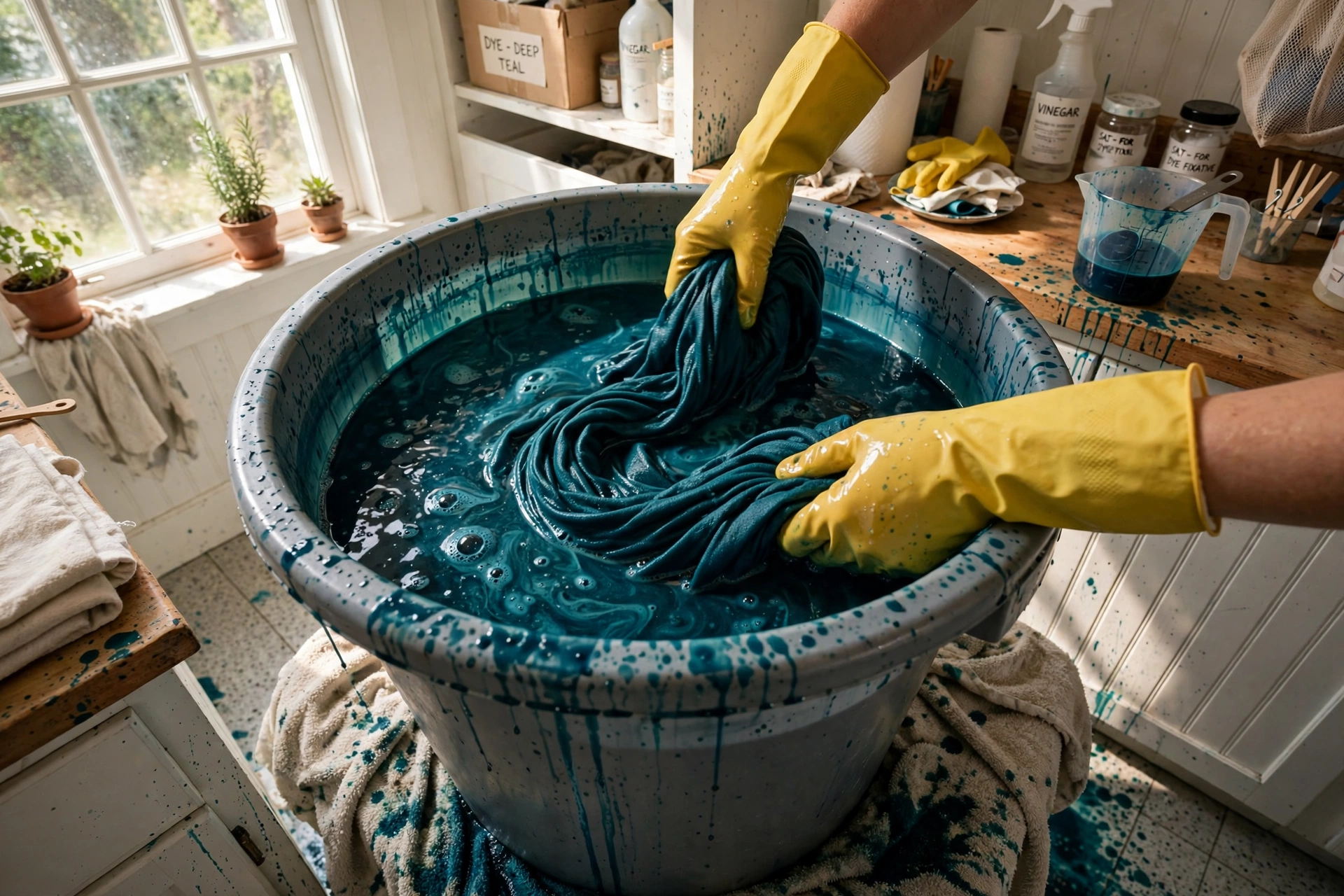
Every house has a drawer or a shelf of fabric that is perfectly good and completely wrong. Towels that faded to a colour nobody chose. A duvet set you still like, just not in that shade anymore. Curtains that clash with the wall you painted in spring. Dyeing them costs a few coins and an hour, and it is one of the few small-space tricks that gives you something that feels new without anything new entering the house.
But dye is not paint, and it does not forgive the way paint does. It bonds with the fibres themselves, and different fibres bond differently. Get that one fact straight before you buy a packet and the rest of this is easy. Get it wrong and you will dye a polyester duvet cover three times and watch it come out exactly the colour it went in.
First, the fibre truth: check the label
Home dyes are made for natural fibres. Cotton, linen, viscose (also sold as rayon), silk and wool all take dye well, because the dye can actually get into the fibre and stay there. A 100 percent cotton duvet cover is the perfect candidate: big, flat, all one fibre, and it will come out an even, honest colour.
Synthetics are another story. Polyester, nylon and acrylic mostly refuse ordinary home dye. Their fibres are closer to plastic than to plant, and the colour sits on the surface for a rinse or two and then washes away, or takes in patches where the weave is looser. There are special disperse dyes made for polyester, used hot on a stovetop, and they do work, but that is a different product and a more careful job. For a first project, walk straight past anything that says polyester on the label.
Blends land in between, which is worth knowing before you fall in love with a result. A cotton and polyester mix will take the dye at roughly half strength, because only the cotton half is listening. The colour comes out softer and a bit heathered. Sometimes that is lovely. Just do not expect the deep shade on the packet from a 50/50 sheet set.
| Fibre | How it takes home dye | Good candidates |
|---|---|---|
| Cotton, linen | Best of all. Even, deep colour. | Towels, duvet covers, tablecloths, curtains |
| Viscose / rayon | Very well, often a shade deeper than cotton. | Curtains, throws, loose covers |
| Wool, silk | Well, with gentle handling and cooler water. | Throws, cushion covers, scarves turned into runners |
| Cotton blends | Half strength, softer result. | Sheet sets, mixed tea towels |
| Polyester, nylon, acrylic | Refuses ordinary dye. Needs special disperse dye. | Skip these for a first project |
Choosing what to dye
The best candidates are things that are sound but faded: towels that went pale, a duvet set you are tired of, plain curtains, a good tablecloth with a dull life. Dye refreshes colour and evens out general fading and light marks beautifully.
Here is the honest limit, because the packets will not tell you: dye does not hide everything. A light stain under a darker dye usually disappears. A dark stain stays a dark stain, just wearing the new colour. And bleach marks are the real trap. A bleach spot has had its colour stripped and its fibres changed, so it takes dye differently from everything around it, often lighter, sometimes not at all. If your item has bleach spots, dye it a deep colour and accept the spots may still ghost through, or pick a different item. I learned this on a tablecloth I loved. The spots are still there, now in teal.
Two ways to do it: machine or bucket
In the washing machine
Machine dyes come as pods or bottles you put straight in the drum with the wet fabric. This is the easy route and the right one for big items: duvet covers, curtain pairs, a full set of towels. The machine keeps everything moving, which is what even colour is made of, and it does the rinsing for you. Your job is mostly weighing, loading, and the clean-up wash afterwards.
In a bucket or on the stovetop
Bucket dyeing is cheaper per item and gives you more control over the depth of colour, because you can lift a corner, look, and give it longer. It is also more mess, more stirring, and your arms are the agitation. It suits smaller things: tea towels, cushion covers, a single curtain, clothes. Whichever dye you buy, some cotton dyes ask for salt and some come with a fixer built in or in a second sachet. Follow your own packet on this. The amounts are printed there for a reason, and they differ between brands, so I am not going to invent numbers here that might be wrong for the packet in your hand.
One thing every packet agrees on: dye is dosed by the dry weight of the fabric. Weigh your item on the kitchen scales before it gets wet. A duvet cover weighs more than you think, and under-dosing is how people end up with a pale, apologetic version of the colour they wanted.
My rule: if the item, dry, weighs more than the packet says it covers, buy the second packet. Splitting the difference gives you a colour that is neither the old one nor the new one, and you will look at it every day.
Prep: the unglamorous half that decides everything
- Wash the item first, without fabric softener. Softener coats the fibres, and coated fibres block dye. A plain wash with detergent only, then keep the item damp.
- Pre-wet it evenly. Dry patches grab dye faster and you get clouds. Wet through and squeezed out is the state you want.
- Cover everything. Old towels or a plastic sheet over the worktop and floor. Dye splashes are forever on fabric, and they can mark grout and pale worktops too. If a splash lands, wipe it that second, not after the stirring.
- Gloves on, old clothes on. You will look like you have been fighting a squid. That is normal.
- Pick the biggest bucket you own. Room to move is the whole secret of even colour. More on that below.
The process, in order
Mix the dye exactly as your packet says: dissolved fully, in water at the temperature it asks for, with the salt or fixer added the way it describes. Undissolved specks of dye powder landing on fabric leave dark freckles, so stir the bath before anything goes in.
Lower the wet fabric in slowly, opening it out as it goes under so no fold is trapped dry inside. It should be fully submerged with room to swim. Then keep it moving. Stir, lift, turn, push it down again. The first minutes matter most, because that is when the dye is strongest and any part left folded against itself will come out paler. Set a timer for the time on the packet and keep visiting it. Put the radio on. This is not skilled work, it is patient work.
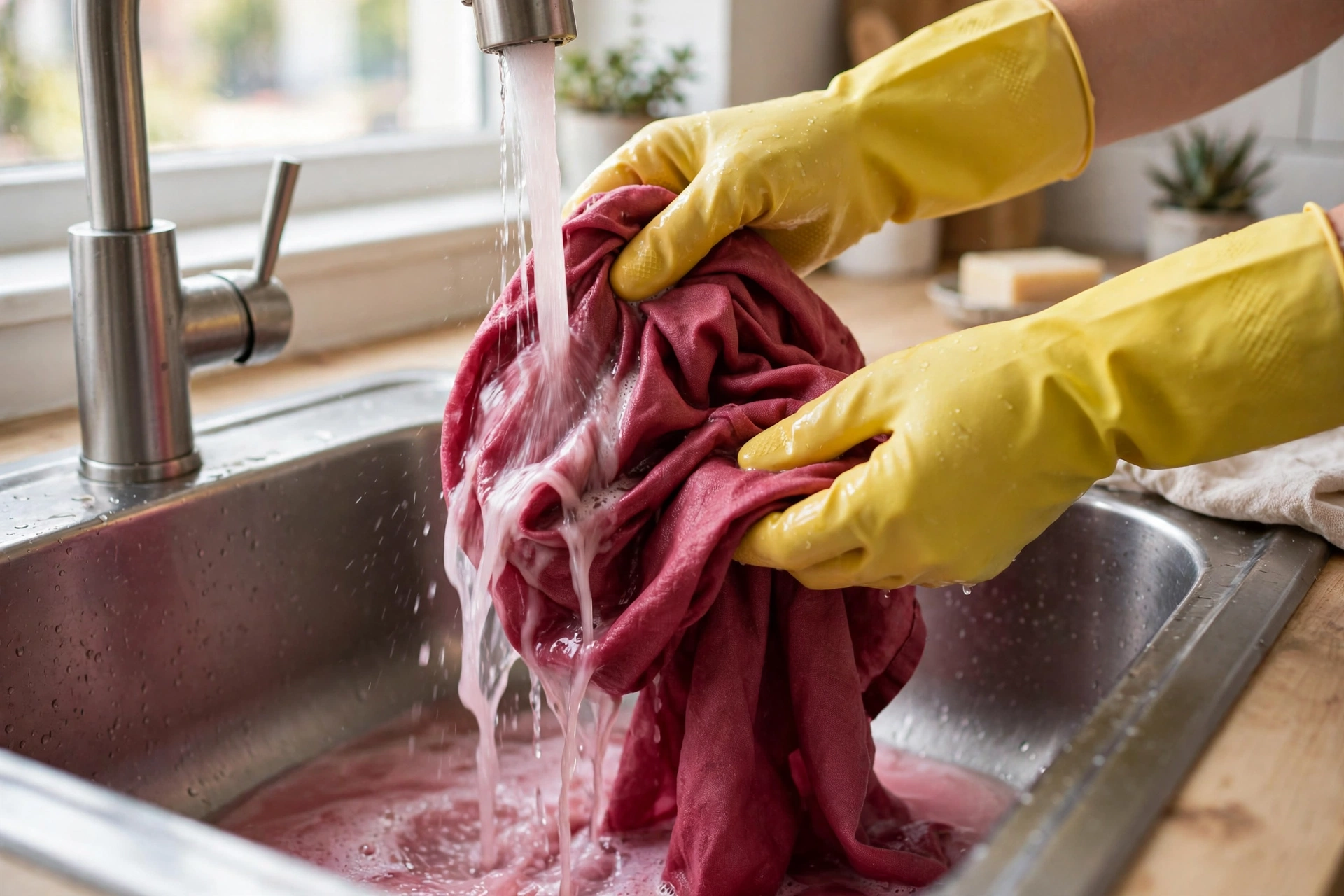
When the time is up, lift the fabric out and rinse it under a tap or in changes of water until the water runs mostly clear. Then wash it on its own, with a little detergent, before it goes anywhere near the rest of your laundry. Dry it out of strong sun for the first dry if you can, and only judge the colour once it is completely dry. Wet fabric always looks a good two shades braver than it really is.
The colour maths nobody puts on the packet
Dye is see-through. It does not cover the old colour, it layers over it, so the result is always the dye colour mixed with whatever was already there. Blue dye on a white towel gives you blue. Blue dye on a yellow towel gives you something green-leaning, every time, because that is what blue over yellow does. A faded red duvet under navy dye comes out a deep plum, which might be gorgeous, but it will not be navy.
The other rule follows from the same fact: you can only go darker or richer, never lighter. Dye adds colour. It cannot take you from brown back to cream. Colour removal is a separate product with its own process and its own risks, and it is a different day and a different article. If the item is too dark for the colour you want, dye is not the tool. Paint the room instead and let the duvet be.
Afterwards: the honest housekeeping
If you used the machine, wipe the door seal and the detergent drawer with an old cloth. Dye residue hides in the seal folds, it is genuinely there, and it will find the next white wash if you leave it. Then run an empty hot wash. That is the whole ritual, and it works.
The dyed item itself will bleed a little colour for its first few washes. That is not failure, it is loose dye leaving. Wash it alone, or with things of the same colour, until the rinse water stays clear. After that it behaves like anything else you own.
Mistakes I have made so you do not have to
- Dyeing polyester and hoping. Hope is not a fibre treatment. Check the label, believe the label.
- Cramming. A king duvet in a washing-up bowl will come out tie-dyed whether you wanted that or not. If it cannot move, it cannot dye evenly.
- Skipping the pre-wash. The softener film you cannot see is the patchiness you will see.
- Judging the colour wet. I once re-dyed a curtain that did not need it. Dry it. Then decide.
- Practising on the good towels. Start with the tired set at the back of the cupboard. If it goes wrong, nothing is lost, and if it goes right, you have a success to copy with the good ones.
Questions I get asked about dyeing fabric
Will dyeing ruin my washing machine?
No, not if you follow the packet and do the clean-up afterwards. Machine dyes are made to be used in a domestic machine and they rinse away. The two things that matter are wiping the rubber seal, where residue settles, and running an empty hot wash before your next load. Skip those and the machine is fine but your next white shirt might not be.
Can I dye something back to white?
No. Dye only adds colour, so there is no packet that takes fabric back to white. Colour remover exists as a separate product, and even that usually gets you to a pale, uneven base rather than a true white, and it is hard on fibres. If white is the goal, the honest answer is that the item has had its run.
My item is a cotton and polyester mix. Is it worth trying?
Yes, with lowered expectations. Only the cotton part takes the dye, so expect about half the depth on the packet and a slightly softer, heathered look. Pale colours on blends can look barely there. If you want a strong result on a blend, choose a shade deeper than your target and let the blend bring it down.
Will the colour wash out?
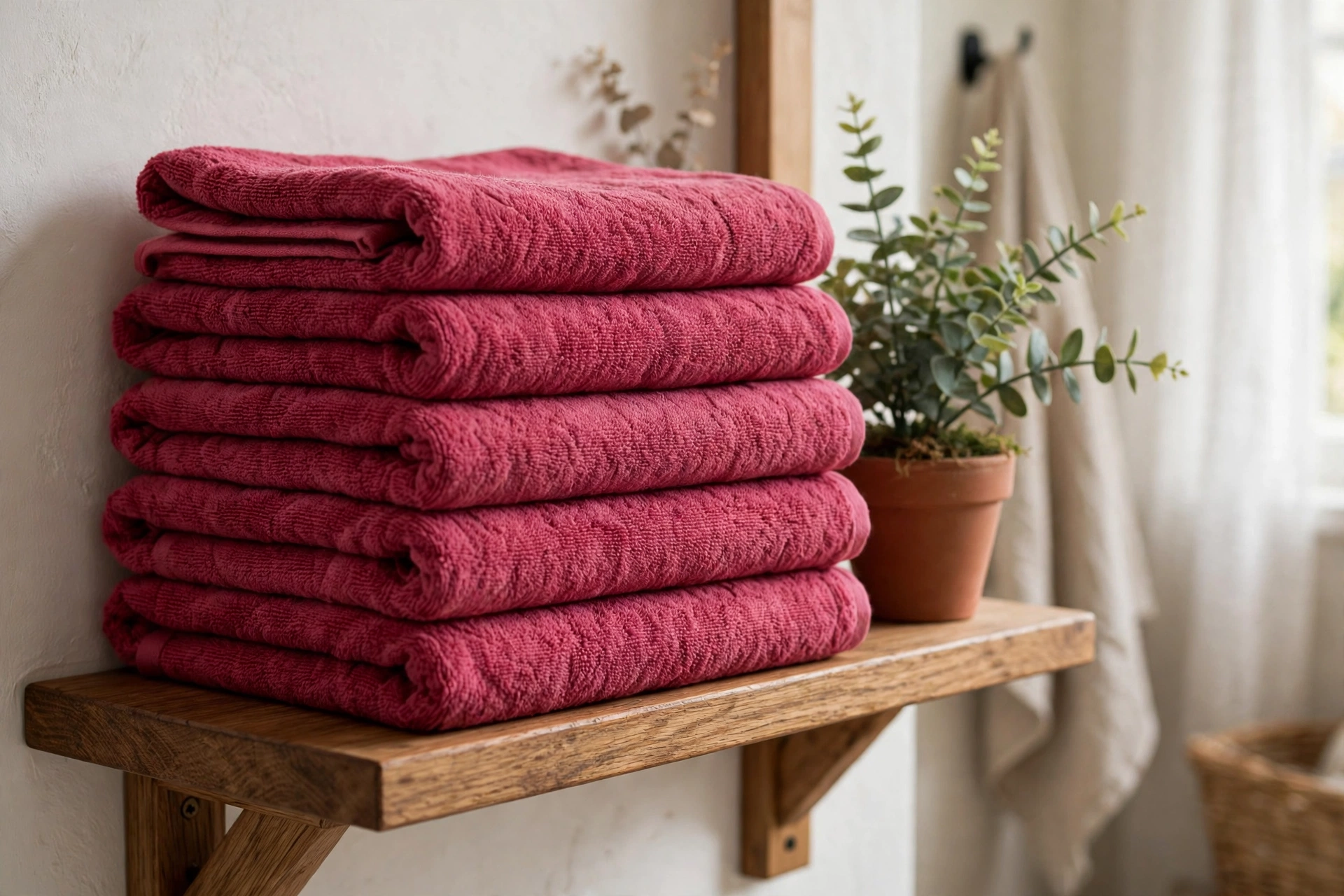
A little loose dye washes out in the first few washes, and then it settles. What is bonded to the fibre stays. Wash the item separately at first, use cool water, and do not leave it sitting wet in a heap. Dyed towels and bedding in this house are on their second year and still holding their colour well.
Start with one tired, all-cotton thing and a colour you already love somewhere in the house. That is the whole project, and the drawer of wrong-coloured fabric gets smaller every time you do it. Tell me in the comments what you are thinking of dyeing, and if you are not sure about the fibre, tell me what the label says and I will talk you through it.
Lisa Ben
Lisa paints, builds, thrifts and rearranges her way through one very patient house, then writes down everything she learns here on Wazala. She would rather dye it, fix it or move it than buy it twice. New projects land every Tuesday, Thursday and Saturday, and the Sunday Letter rounds them up once a week.
You might also like

How To Sew Basic Curtain Panels (Straight Lines Only)
Plain panels from flat fabric, no pattern and no fancy stitches. Dye the fabric first and they are yours alone.
Read more →
Small Closet, Sorted: The Two-Hour Edit
The edit that makes a small closet hold more and look calmer, including what to do with the clothes that no longer earn their rail space.
Read more →
Downsizing A Home: What To Keep, What To Let Go
Room by room decisions for a smaller home, and why the fabric you already own is worth refreshing before it is worth replacing.
Read more →