Cheap Flower Arrangements That Look Expensive (Budget Blooms Method)
 By Lisa Ben
·
October 27, 2026
·
8 min read
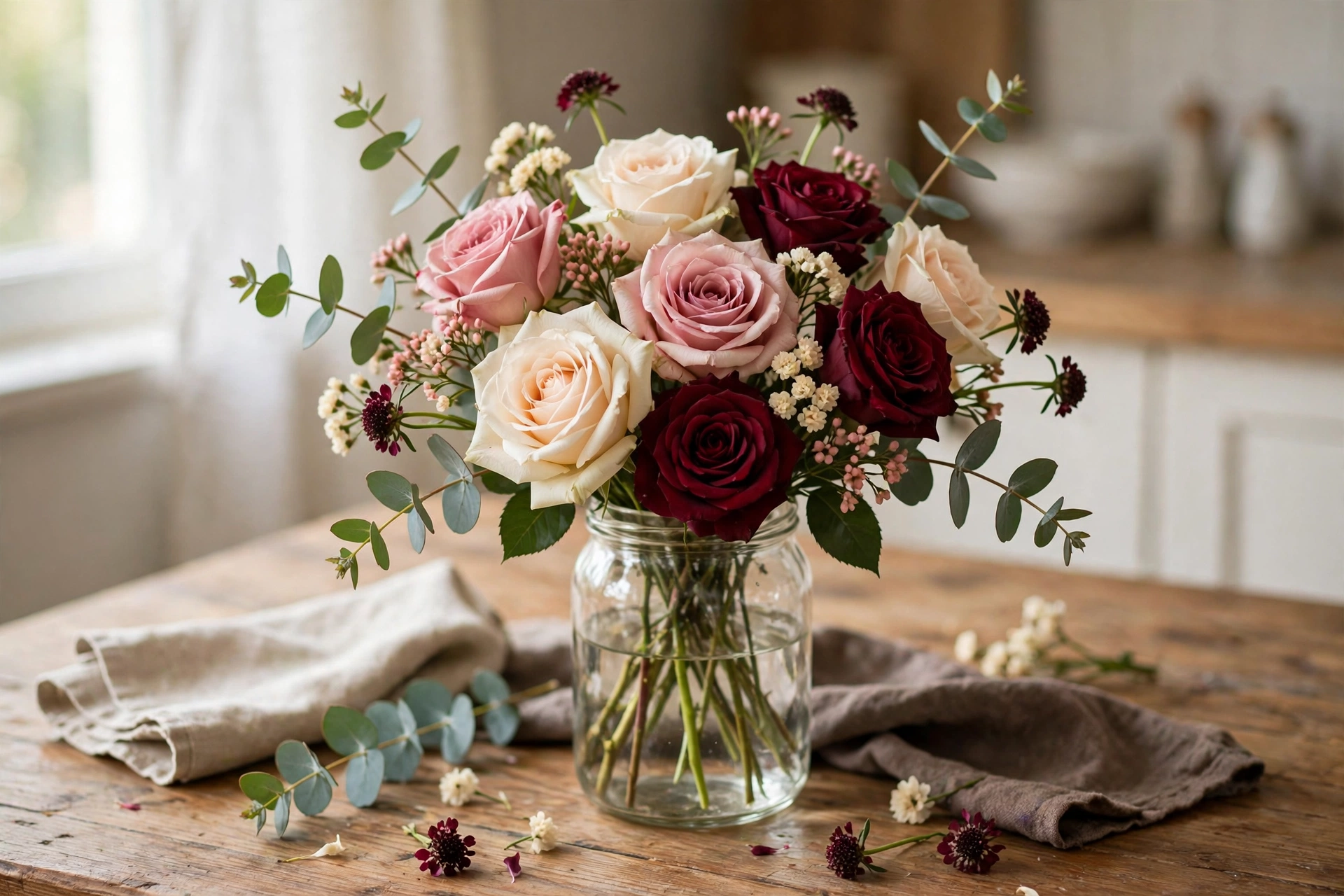
Fresh flowers are the fastest way to make a house look looked-after. They are also, done the florist way, a very quick way to spend real money on something that lasts a week. A ready-made arrangement can cost more than the dinner it decorates, which is exactly backwards, so I stopped buying them.
What I do instead is this: one plain supermarket bunch, split the right way, plus greenery cut from the garden. The whole thing usually costs less than the coffee sitting next to it. The bunch is not the trick, though. The method is. Here it is, step by step.
Step 1: Buy one bunch, in one colour
This is the whole secret, and it feels wrong in the shop. Those mixed bunches, a bit of everything in clashing colours, look cheap no matter how fresh they are, because nothing repeats. Your eye reads them as leftovers. One colour in bulk reads as a decision. It is the same reason a florist's window looks expensive: they work in masses of a single flower, not handfuls of six different ones.
So pick one bunch, all one colour, and pick it by freshness rather than variety. You want firm buds, green stems that are not slimy at the ends, and leaves that stand up instead of drooping. If the shop has two bunches of the same colour reduced at the end of the day, that is your lucky day. Otherwise one good bunch is plenty.
Step 2: The ten-minute prep that doubles vase life
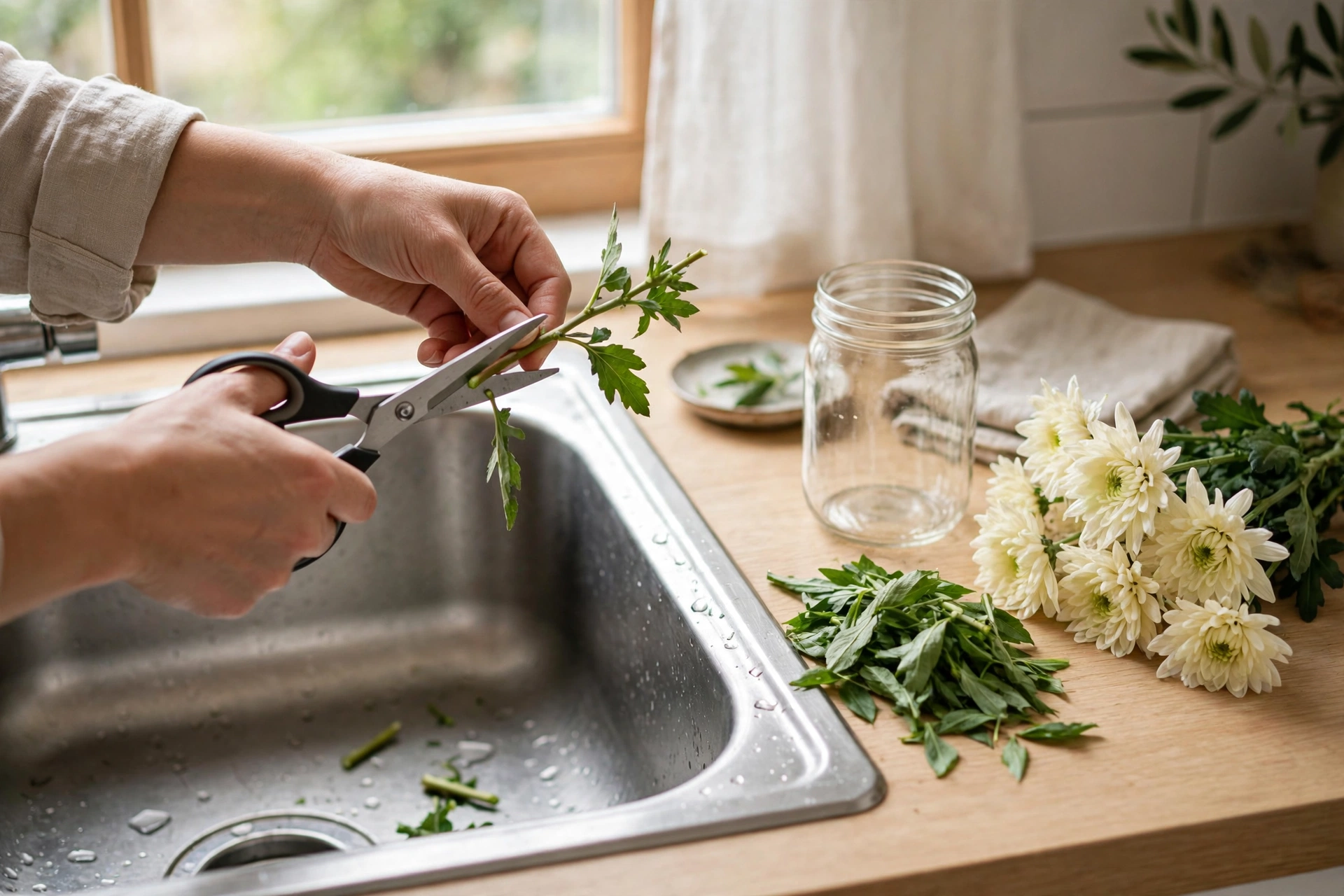
Most supermarket flowers do not die of old age. They die of dirty water and blocked stems, and both of those are fixed at the kitchen sink in about ten minutes.
Strip off every leaf that would sit below the waterline. Leaves under water rot, feed bacteria and turn the water cloudy, and cloudy water is what kills the flowers. Then cut each stem at a sharp angle, either under the tap or immediately before it goes into the vase, so the cut end gets a wide drinking surface and does not seal itself shut on the air. Wash the vase properly with hot soapy water first, too. A vase that held last week's flowers still holds the bacteria that finished them off.
Fill with tepid water, not cold, and change it every two days, snipping a sliver off the stem ends each time. If your bunch came with a little food packet, use it, it does help. But clean water, changed often, does most of the work on its own.
Step 3: Split the bunch three ways
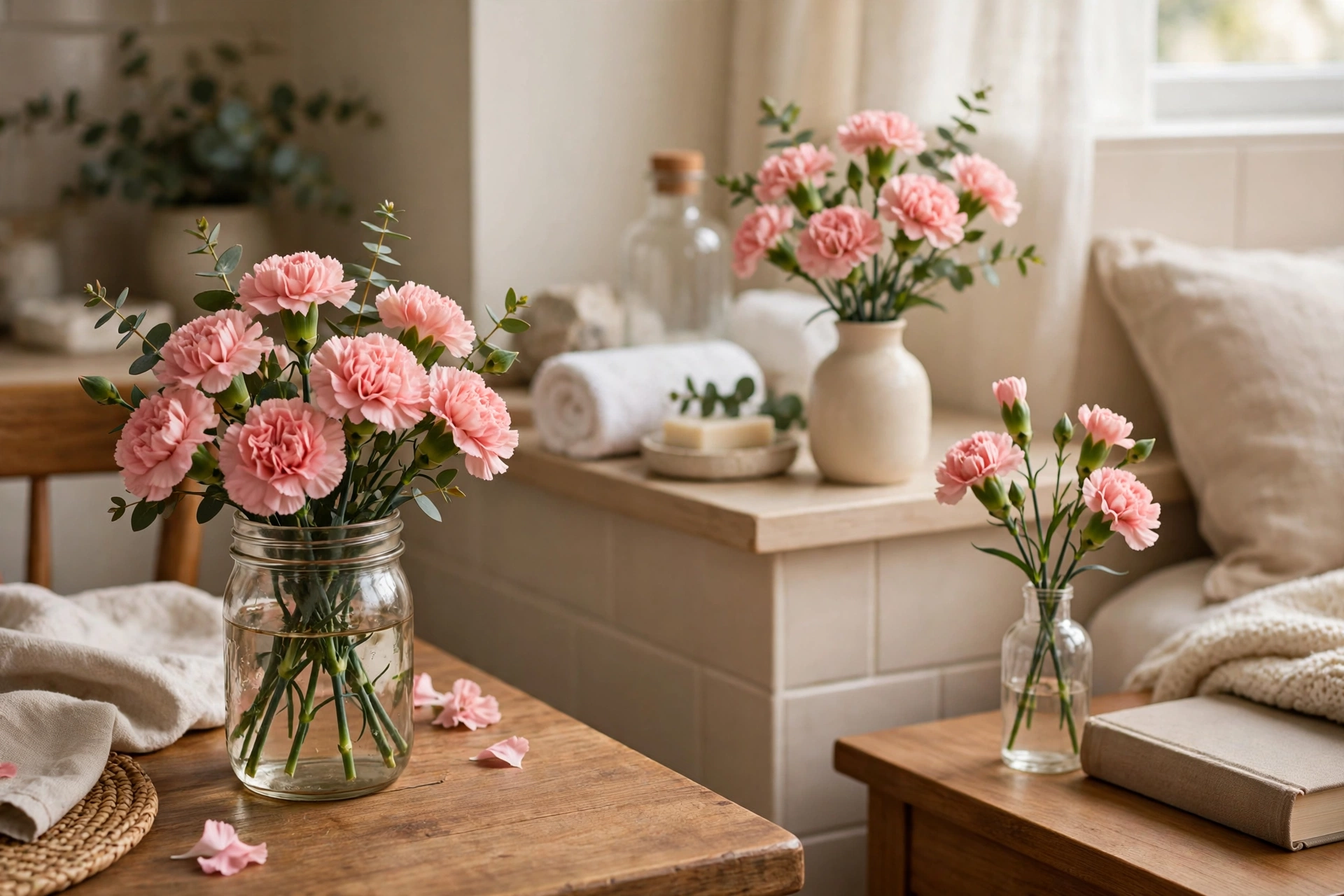
Here is where a modest bunch starts behaving like three. Instead of one arrangement in one room, make three small ones: a jar in the middle of the table, a small vase in the bathroom, and a few stems in a bottle by the bed. Same colour, three sightings.
It works for the same reason matching cushions work. Repetition is what makes a house look styled rather than decorated-at-random, and a colour your eye keeps meeting feels deliberate. There is a practical bonus too. A small bunch in a big vase looks lost and a bit sad. The same stems, divided into small vessels, look plentiful everywhere.
Step 4: Let greenery do the expensive work
Look at any costly arrangement and most of the volume is not flowers. It is greenery. The good news is that greenery is the one ingredient that grows free outside your door. Trailing ivy, a few stems of eucalyptus if you have it, any neat evergreen shrub, even sprigs of rosemary from the herb patch, which smell lovely on a table. Only cut from your own garden or hedge, and take little bits from all over rather than scalping one spot.
Put the greenery in first and the flowers into it. The leaves hold the stems apart, fill the gaps and give the whole thing a shape, so five flower stems suddenly look like ten. This is the step that turns a bunch into an arrangement.
One small thing that helps: greenery with woody stems, like eucalyptus and most shrubs, drinks better if you split the last inch of the stem with scissors or crush it gently, so more of the inside is touching water. Soft trailing stuff like ivy needs nothing but the same below-the-waterline leaf stripping as the flowers. Treated the same way, garden greenery usually outlasts the bunch it is holding up, so keep it when you refresh and just build the next arrangement around it.
Step 5: The vessel rule
Cheap arrangements usually fail at the vase, not the flowers. A wide-necked vase swallows a small bunch: the stems slide apart, flop sideways and show more water than flower. A narrow neck holds stems upright and close together, which is the whole game.
So raid the cupboard instead of buying anything. Jam jars, milk bottles, stoneware jugs, a teapot with a chipped spout. If a wide vase is all you have and you love it, tape a grid across the mouth, two strips of tape each way, and drop the stems into separate squares. They will stand where you put them.
Step 6: Odd numbers, different heights
Two finishing habits cost nothing. First, arrange in odd numbers: groups of three or five stems read as finished, where pairs look stiff and accidental. Second, cut the stems to different lengths so the flower heads sit at different levels, like a little staircase, instead of one flat hedge at a single height. Tallest stem in the middle or at the back, shortest at the front. That is all there is to it.
If the jar is headed for the dinner table, keep the whole thing low, below chin height once it is sitting among the plates. Guests should be looking at each other over the flowers, not around them. The tall, dramatic version belongs on a hall table or a mantel, where nobody is trying to hold a conversation through it.
My buying shortcut: choose the bunch with the most closed buds, not the most open flowers. Open flowers are at their best today. Buds are next week's arrangement, thrown in free.
Which cheap flowers actually last
Not all budget bunches are equal, and the reliable ones are rarely the glamorous ones. Chrysanthemums are the marathon runners, a week easily and often closer to two. Alstroemeria, the little lily-like one, opens slowly over days and lasts a week or more. Carnations are deeply unfashionable and last for ages, and I will defend them cheerfully: the ruffled ones look like peonies from two steps back. Tulips are the entertainers, they keep growing in the vase and bend towards the light, so plan for the lean instead of fighting it.
Roses are the risky spend. Lovely, but they can blow open and drop their petals within days, so if you buy them, buy tight buds and give them the full sink treatment. And buy whatever is in season where you live. In-season flowers are the cheap ones because they grew nearby. The out-of-season bunch flown in from another hemisphere is where the price hides.
One more worth knowing: gypsophila, the frothy little white filler florists pad everything out with, is usually the cheapest wrap on the shelf, lasts for ages, and dries exactly as it is if you just leave it standing in an empty jar. A wrap of it on its own, in a plain bottle, looks like something from a wedding. Mixed through a coloured bunch, it is the difference between sparse and full.
The day-four refresh
Around day four, take ten minutes and pull the arrangement apart. Bin any dead or browning heads, re-cut the stems that are left, wash the vase, and rearrange the survivors into a smaller vessel with fresh water. The arrangement shrinks gracefully instead of dying all at once. Done this way, one bunch can end the week as three stems in a bottle on the bathroom shelf, and still look like a choice rather than a leftover.
The smaller vessel part matters, because every refresh takes another inch or two off the stems. The arrangement literally gets shorter as the week goes on, so let it move down the sizes: the table jar on Monday, a tumbler by Friday, a little bottle at the end. Shrinking on purpose reads as styling. Wilting in the same big vase reads as neglect.
Mistakes that make cheap flowers look cheap
The rainbow bunch. Six colours in one wrap will fight each other in every vase you own. One colour, always.
Leaves rotting under the waterline. The commonest killer there is. If a leaf would sit in the water, it comes off.
Eight stems rattling around a giant vase. The bunch has not changed, only the ratio has. Small vessel, narrow neck.
Flowers in full sun, or next to the fruit bowl. Heat shortens their life, and ripening fruit gives off ethylene gas, which ages flowers fast. That is a real thing, not a folk tale, and it is why the lovely vase beside the bananas always dies first.
Questions I get asked about budget flowers
Can I mix two different bunches?
Yes, if they share a colour family, or if one of them is white or mostly green. Two colours look like a plan. Five colours look like an accident. When in doubt, keep the second bunch for next week instead.
How long should a supermarket bunch honestly last?
A week is a fair expectation with the prep and water changes. The long-lived types, chrysanthemums, alstroemeria and carnations, often go well past that. If your flowers are dying in three days, the problem is almost always the water and the vase, not the flowers themselves.
Is flower food worth bothering with?
The little packet helps, so use it if one comes with the bunch. But it is the junior partner. A clean vase and fresh water every two days do most of the work, and no packet rescues flowers standing in last week's soup.
What if I have no garden to cut greenery from?
Use the bunch's own foliage, which most people throw away without looking at it, or keep a pot of rosemary on the windowsill and snip that. And if there is no greenery at all, do not panic: a narrow jar of one colour still works. Greenery is the booster, not the requirement.
One bunch, one colour, three little jars, and something green from the garden. That is the whole method, and it has carried every dinner party and ordinary Tuesday at my house for years. Tell me in the comments which flowers are cheap where you live this month, and I will add the best of them to my list.
Lisa Ben
Lisa paints, builds, thrifts and rearranges her way through one very patient house, then writes down everything she learns here on Wazala. White paint is her favourite argument. New projects land every Tuesday, Thursday and Saturday, and the Sunday Letter rounds them up once a week.
You might also like
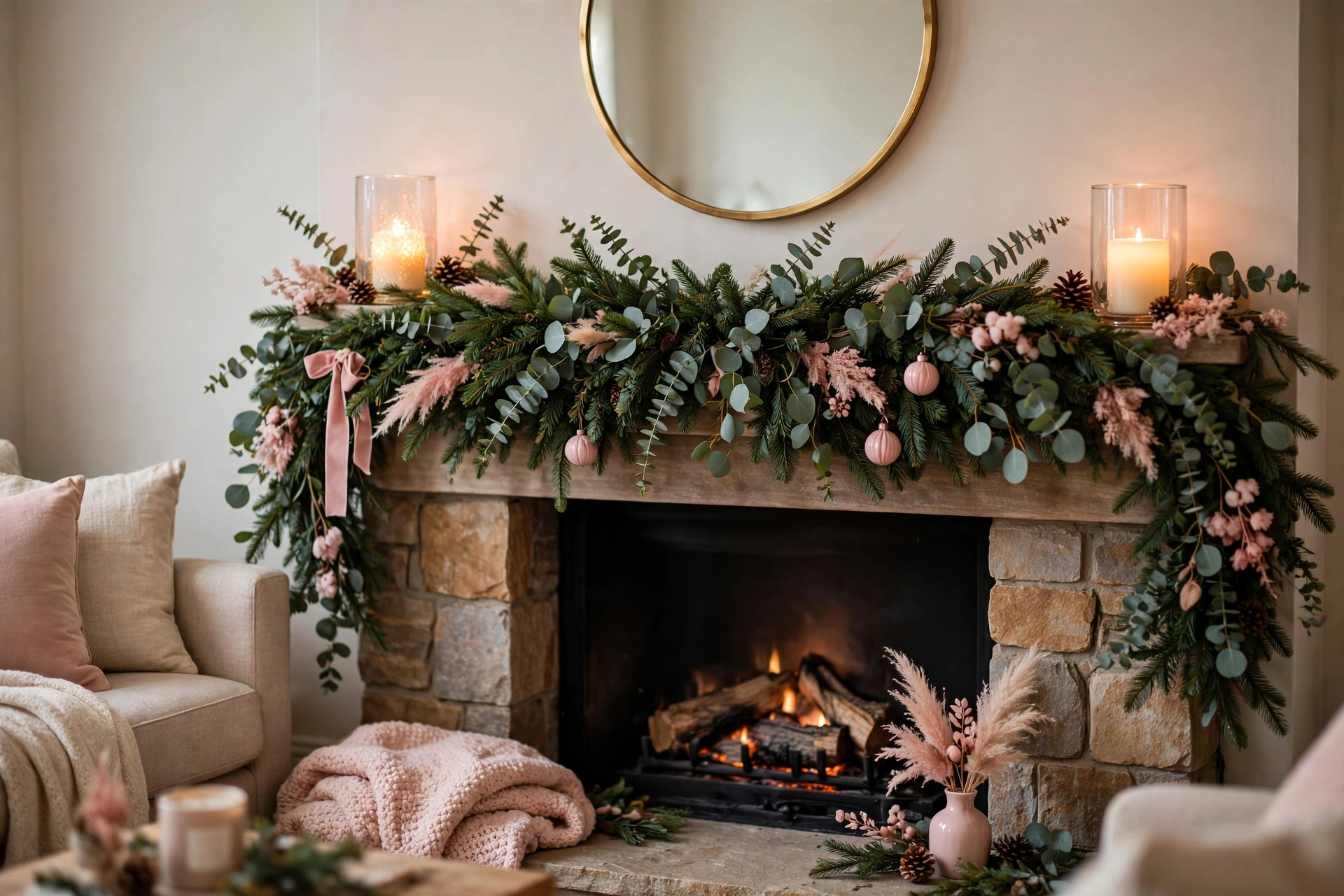
9 Christmas Mantel Ideas From Plain To Full-On Festive
Greenery, candles and things you already own, arranged nine ways from quiet to full-on.
Read more →
How To Make A Wreath For Any Season
One plain wreath base, remade for every season with whatever is growing outside.
Read more →
A Simple Tablescape Formula For Dinner Guests
The plain formula for a table that looks set on purpose, without a house full of kit.
Read more →