Autumn Porch Decor With Pumpkins, Mums And Lanterns
 By Lisa Ben
·
October 16, 2026
·
9 min read
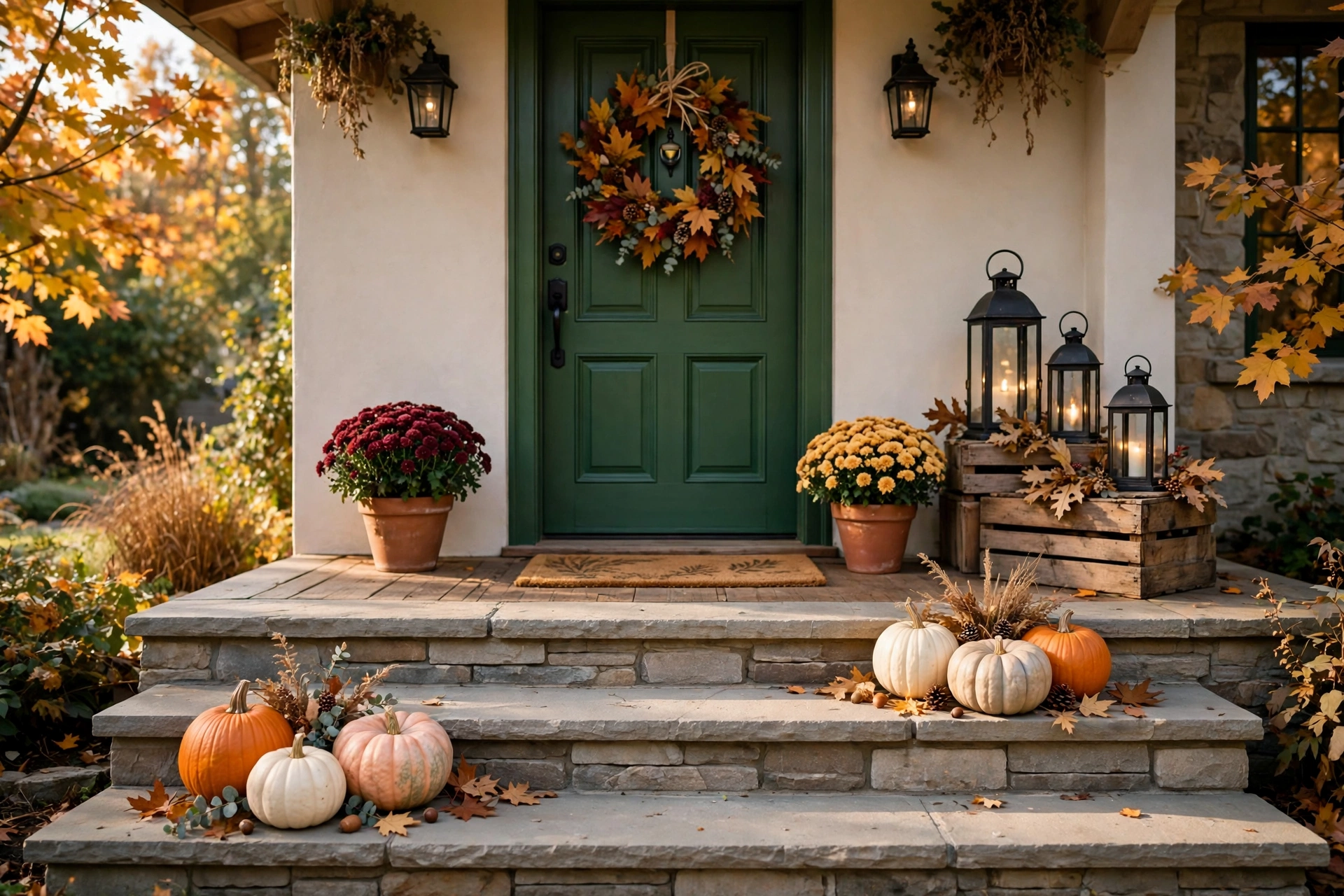
For years my autumn porch looked like a pumpkin spill. I would come home from the garden centre with a boot full of pumpkins and mums, set everything down in a row along the step edge, and step back to find it looked less like decorating and more like an abandoned delivery. The plants were fine. The pumpkins were fine. The arrangement was the problem.
The fix turned out to be embarrassingly simple, and it is the same trick florists and shop window dressers use. Nothing on my porch changed except where it stood. Here is the whole method, in the order I actually do it, on one afternoon with a broom, a crate and whatever the garden centre had left.
The trick: clusters and triangles, not rows
Things grouped in odd-numbered clusters read as arranged. Things spread out in a line read as storage. It is the same reason three cushions look styled on a sofa and five in a row look like a waiting room. So the porch works in threes: three pumpkins together, three heights in every group, three layers across the whole display.
Each cluster is a rough triangle. Something tall at the back, something medium in the middle, something low at the front. Your eye reads the slope and it feels deliberate, even when every single item came off a supermarket pallet. I build one cluster on the left of the door until it looks right, then echo it on the right, same heights, not necessarily the same items. A loose echo looks warmer than matching pairs, and stops the whole thing feeling like a hotel entrance.
Start with a clean porch
Before anything pretty comes out, sweep the steps, shake out the mat, and wash the worst of the summer dust off the treads. I use a bucket of hot water and a stiff brush, and I wipe the door down while I am at it, including the cobweb in the top corner.
This is not fussiness. Decor laid over a dirty base does not hide the dirt, it frames it. A pumpkin next to a grubby step makes you look at the step. Ten minutes of cleaning makes everything after it look twice as expensive, and it is the only part of this project that is genuinely free.
Layer one: height at the back
Start at the back and work forward, tallest things first. On a stepped porch the top step does some of this work for you, but I still add height with whatever is in the shed: a wooden crate, an upturned terracotta pot, a plant stand. These are the stilts of the display, and nobody is meant to notice them.
The anchors on my porch are two lanterns on a crate at one side of the door and a tall mum in a big pot on the other. Height near the door frames the doorway, which is the part visitors actually look at, and gives the pumpkins lower down something to sit under. If your porch is flat with no steps, crates matter even more. Without a high point somewhere, a flat display of pumpkins just reads as a pile near a wall.
Layer two: mums in the middle
Chrysanthemums are the middle band, the colour that fills the gap between the tall lanterns and the pumpkins on the ground. Mine never leave their plastic pots. I drop the whole pot into a wicker basket or a nicer cache pot, and if the basket is too deep I stand the pot on a brick inside it so the flowers sit at the rim. Nobody has ever crouched down to check, and keeping the pot means watering stays easy and the plant can come out again when it fades.

Now the honest part, because mums have a reputation for dying by the weekend and it is mostly a buying problem. Buy them in bud, when most of the flowers are still tight green knots with just a hint of colour showing. A plant in bud will open slowly on your steps and last for weeks. A plant already in full, glorious flower at the shop has done most of its performing before you got there, and you are buying the last few days of it. I learned that one the expensive way, twice.
Water them from below if you can, standing the pot in a saucer or a washing-up bowl for twenty minutes, because water poured over the top flattens the flowers and splashes the foliage, and wet foliage in cool nights is where the mildew starts. Pinch off the dead heads as they go over. It takes a minute, and the plant keeps pushing its energy into the buds that are left.
Layer three: pumpkins on the ground
Pumpkins go last and lowest, clustered in threes at the foot of the steps and tucked against the pots. Mix the sizes, one big, one medium, one small, and mix the colours too. The pale cream and dusty green heirloom ones do something useful next to the standard orange: they calm it down, and they make the orange look richer instead of louder. A stack of two, flat-ish ones only, makes a good third height inside a cluster when you are short on crates.
Leave them uncarved. I know, I know. But a carved pumpkin on a mild October porch is softening within days, and by the second week it is a slumped, wasp-attended puddle with a face. An uncut pumpkin in the same spot lasts for weeks, often to the end of November. If you want the glow, put the candle in a lantern and let the pumpkins keep their dignity. Carve one on the day itself if you must, and count it as a one-night decoration.
One more thing that saves pumpkins: keep them off bare wet ground. A pumpkin sitting in a puddle on cold concrete rots from the bottom up, quietly, and you find out when you pick it up. Set them on the dry edge of a step, on a woven mat, or on the saucers and offcuts of wood you used for height. Air underneath is the difference between a pumpkin that lasts the season and one that leaves a ring on your step.
Lanterns and light
The lanterns are the reason the porch still looks like something at six in the evening, which in October is when most people see it. Mine hold LED candles on timers, and I will defend that choice to anyone. A porch is windy. Real candles gutter, smoke their glass black, and blow out between the car and the door. LED candles come on at dusk, glow steadily through the evening, and do not set fire to a basket of dry leaves, which is a sentence I would rather not test.
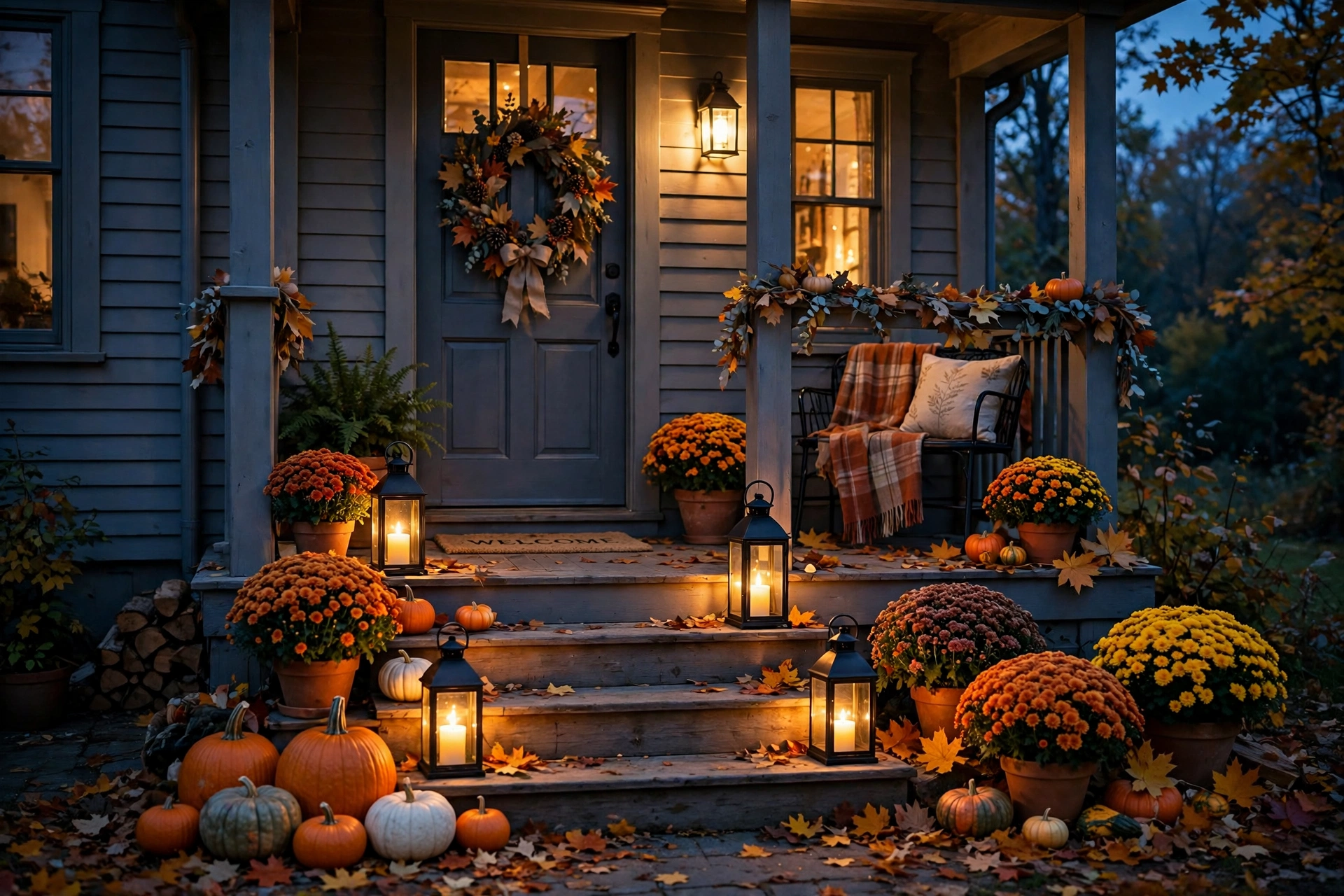
The one exception: a real flame in a heavy, tall lantern, on a still evening, when you are home and awake and sitting where you can see it. That light is genuinely better and I do it on weekends. It is a treat, not the system. The system has to work on a wet Tuesday when nobody is watching, and that system is batteries and a timer.
The door, the mat and one soft thing
The display frames the door, so the door has to hold up its end. This is where the autumn version of my any-season wreath goes: same grapevine base I use all year, with the summer flowers swapped for seed heads, a few small cones and dried orange slices wired on. Ten minutes at the table and the door stops being the blank bit in the middle of the picture. A clean, shaken-out doormat does more than people expect too, since every visitor stands on it and stares at it while waiting for you to answer.
I allow myself exactly one soft thing, a cushion or a folded throw on the porch chair, in a rust or mustard that picks up the mums. Here is the honesty: outdoor textiles get damp. If you leave them out overnight they will feel clammy by morning and smell like it by the weekend. Either bring the soft thing in at night, which is what I do, or accept that it lives a short, slightly soggy life out there. There is no third option, whatever the label on the cushion promised.
Keeping it alive for the season
An autumn porch is not a fit-and-forget display, but the upkeep is small enough to do while the kettle boils. Watering the mums is ninety percent of the job; they are thirsty plants in small pots and a dry mum wilts fast, though it usually forgives a same-day rescue. Once a week, turn each pumpkin a quarter turn and look at the bottom. A soft spot caught early can be trimmed of company and moved to the dry spot; a soft spot caught late is a mess on the step. And sweep the fallen leaves off the display every few days. Leaves will cover the porch whether you decorate or not, but if you let them pile into the arrangement, the whole thing stops looking arranged and starts looking like the season happened to it.
Where the money goes: buy the lanterns, the crate and the baskets once, well, and they will come out of the shed every year. The plants and pumpkins are the yearly spend, and they are the cheap part. If the budget is tight this year, one mum and three pumpkins grouped tightly by the door will do more than a dozen things spread thin across the whole front of the house.
Mistakes I have made, so you do not have to
The one-line display is the big one, everything spaced evenly along the step edge like items on a conveyor belt. Even spacing is what gives the pumpkin-spill effect, and the fix costs nothing: push things together into groups and leave some honest empty step between them. Empty space is part of the design, not a gap you failed to fill.
Carving in the first week of October is the second, and I covered it above, but it pairs with another: putting the mums in full sun with no water and being surprised. A south-facing porch in a warm spell cooks a potted mum in a day. If your porch bakes, put the mums at the shadier side and the pumpkins, which do not care, in the sun.
And the one with a safety edge to it: do not decorate the walking path. A porch display that narrows the steps turns every arrival into an obstacle course, with visitors carrying bags and children edge past a pumpkin in the dark. Keep the middle of the steps and the swing of the door completely clear, and put the clusters to the sides. Pretty is not worth a twisted ankle on your own front step.
Questions I get asked about autumn porches
How long will uncarved pumpkins last outside?
Weeks, usually. On a dry step, off the wet ground, an uncut pumpkin commonly lasts from early October to late November. Cold suits them better than warmth. Once a soft spot appears on the bottom it is done, which is why the weekly quarter-turn check matters.
How do I keep porch mums alive longer?
Buy them in bud, water from below every couple of days, and pinch the dead flowers off. Keep them out of the fiercest midday sun if your porch faces south. Do that and most plants flower for four to six weeks instead of collapsing in one.
Can LED lanterns stay out in the rain?
Most outdoor lanterns shrug off rain, but check the candle itself. Battery candles with a sealed base cope fine under a covered porch; on a fully exposed step, bring them in during the worst weather or the battery compartment will corrode by November. Mine live under the porch roof and have survived three autumns.
I only have a doorstep, no porch. Does this still work?
Yes, scaled down to one cluster. One crate or upturned pot beside the door, a lantern on top, a mum in a basket in front of it, and three pumpkins at its feet. That single triangle does the whole job on a doorstep, and it takes ten minutes.
That is the entire method: clean base, three layers, clusters instead of rows, and a broom once a week. Tell me in the comments what your porch faces, sunny or shady, and I will tell you which layer I would spend on first.
Lisa Ben
Lisa paints, builds, thrifts and rearranges her way through one very patient house, then writes down everything she learns here on Wazala. Her porch gets redecorated four times a year whether it needs it or not. New projects land every Tuesday, Thursday and Saturday, and the Sunday Letter rounds them up once a week.
You might also like
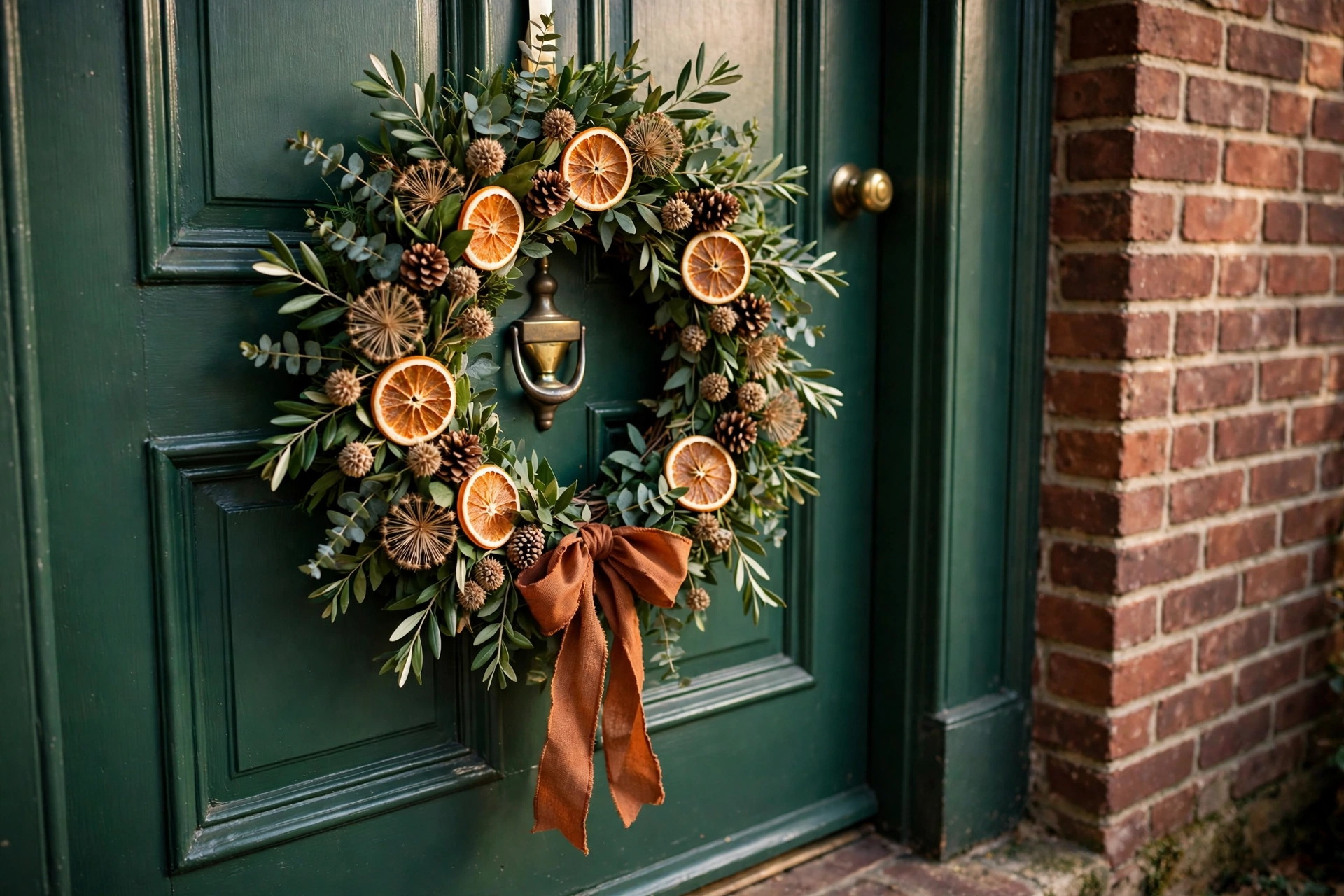
How To Make A Wreath For Any Season
One grapevine base, four looks a year: the layering order and the autumn version that finishes this porch.
Read more →
How To Paint Your Front Door (And Pick The Colour)
Prep, the finish that survives weather, and testing a bold colour first.
Read more →
9 Christmas Mantel Ideas From Plain To Full-On Festive
When the pumpkins retire, the same layering trick moves indoors to the mantel.
Read more →