How To Protect Plants From A Cold Snap (Before The First Frost)
 By Lisa Ben
·
October 24, 2026
·
11 min read

Every autumn there is one night that catches me out. The forecast says "cold", I shrug, and by morning the basil has gone black and the little lemon tree in its pot looks like it has been scolded. I have learned the hard way that protecting plants from a cold snap is not a big job. It is a small job done at the right hour, which is the evening before, in daylight, while you can still feel your fingers.
So here is the routine I now run whenever the forecast turns unfriendly. It takes about half an hour, most of it is moving pots around, and it works for a single chilly night or the first proper frost of the season. One honest warning before we start: frost dates and cold hardiness vary a lot by where you live, so treat this as a method, not a calendar. Check your own forecast and your local gardening advice for your dates.
First, know your tender list
Not every plant needs your help, and wrapping everything in sight wastes an evening and a lot of fleece. The plants that actually suffer on a cold night are a fairly short list. Tender herbs go first: basil gives up at temperatures hardy plants would not even notice, and coriander, mint in small pots and anything newly sown are close behind. Citrus in pots hates cold roots and cold wind together. Young plants of any kind, the ones you planted out late or grew from seed this year, have shallow roots and soft growth, and both chill fast. Anything tropical or Mediterranean that spends summer on your patio, pelargoniums, fuchsias, olive in a small pot, is living outside its comfort zone and knows it.
And then there is the long list of plants that mostly need nothing from you. Established shrubs, roses, lavender in the ground, hardy perennials that die back anyway, spring bulbs sitting quietly underground: a normal cold night passes over them and they do not care. If you are short on time, and we always are, spend it only on the tender list. I keep mine written on a card inside the shed door, because at 6pm in the dark is the wrong moment to be making taxonomic decisions.
Read the forecast like a gardener
The number on the forecast is not the whole story. The nights that do the damage are clear and still, when the sky has no cloud blanket and the ground loses its heat straight up into the dark. A windy night with the same low temperature is often kinder, because the air keeps moving and the coldest layer never settles on your plants. So when I see a clear sky at sunset and a forecast anywhere near freezing, I assume frost in the low corners of my garden even if the number looks safe. Frost pools in dips and against fences, the same way water does.
It also helps to separate two different events. One cold night is a raid: you cover, you hide, it passes, you uncover. A long freeze that settles in for a week is a siege, and it needs a different plan, which I will come to further down. Most autumn cold snaps are raids. Do not build siege defences for a raid, and do not expect a bedsheet to survive a siege.
The evening-before routine, in order
I do these steps in this order because each one makes the next easier. Start in the afternoon if you can, finish before dark, and you are done while your neighbours are still saying "it will probably be fine".
Step 1: Water the soil during the day
This is the step people skip because it sounds backwards, but moist soil holds the day's heat and gives it back slowly through the night, while dry soil lets the cold straight through to the roots. If the day before a cold night is dry, I water the borders and the pots properly, in the morning or early afternoon, so the water soaks into the soil rather than sitting on the leaves. Wet soil around the roots can buy a plant a degree or two, and on a borderline night a degree or two is the whole game. One exception: do not leave foliage dripping wet at cover-up time. Water the soil, not the plant.
Step 2: Move pots to shelter, and huddle them together
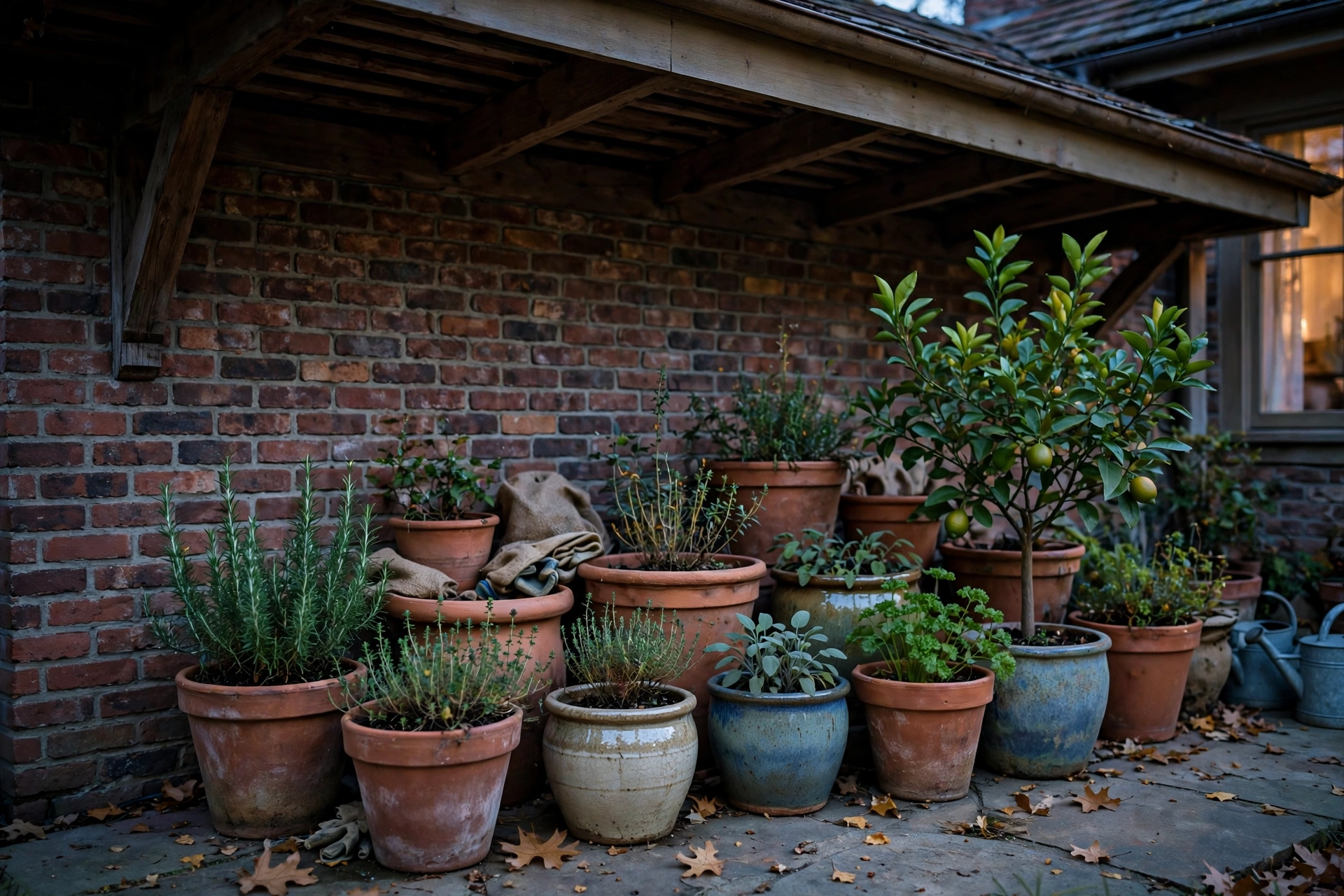
Pots are the most vulnerable things in the garden because their roots sit in a small ball of compost with cold air on every side. Drag the tender ones against the house wall, under an overhang, under a table, anywhere that steals a little shelter. A house wall is the best free heater you own: bricks soak up the day's sun and leak the warmth back out overnight, and the strip of ground right beside the house is often the last place in the garden to freeze. Then group the pots close together, shoulder to shoulder. A cluster of pots shares warmth and loses less heat than the same pots standing alone in a line like soldiers.
Step 3: Cover with fleece or a sheet, held off the leaves
Now cover what cannot be moved. Horticultural fleece is made for this and costs very little, but an old bedsheet or a light blanket works nearly as well. The part that matters is how you put it on. Push a few canes or sticks into the soil around the plant first, a little taller than the plant itself, and drape the cover over them, so the fabric floats above the leaves like a tent. The air gap under the cover is the insulation, and it keeps the coldest surface away from the leaf it would otherwise burn. Then weigh the edges down with bricks, stones or soil, right down to the ground, so the warmth the soil collected all day stays trapped inside the tent instead of sliding out at the hem.
What you must not use is plastic resting on leaves. A plastic sheet looks like protection and behaves like the opposite: it conducts the cold straight through to any leaf it touches, and it traps condensation underneath, so the plant spends the night wet and cold at once, which is the exact combination that turns leaves to mush. I learned that with a tarpaulin and a row of young courgettes I am still slightly bitter about. If plastic is all you have, it has to go over a frame of canes with a clear air gap, never on the foliage itself.
Step 4: Buckets and boxes over the small stuff
For small individual plants, an upturned bucket, a flowerpot or a cardboard box is a perfect one-night shelter, quick on and quick off. Put them on at dusk, prop a brick on top if the night is breezy, and lift them in the morning. Cardboard only survives a dry night, a wet one turns it to porridge, but for a single clear frosty evening it is genuinely good insulation. This is also the easiest way to protect a neat row of seedlings without wrestling a big sheet of fleece in the dark.
Step 5: Mulch the borders thickly
Plants in the ground cannot be carried anywhere, so protect the part that matters most, which is the crown and the roots. A thick layer of mulch, bark, straw, compost or even a pile of dry leaves heaped 8 to 10 centimetres deep over the root zone, works like a duvet: it slows the frost reaching the soil and stops the ground temperature swinging wildly. It does nothing for the leaves above it, so tender top growth still wants a fleece tent over the top on the very coldest nights. Think of mulch as protecting the plant's future even when tonight's leaves take a knock. Crowns that stay unfrozen grow back. Crowns that freeze solid often do not.
Step 6: Bring the real tenders indoors for the night
Some plants should not be negotiated with. The lemon tree, the tenderest herbs, anything you would genuinely grieve, comes inside for the night: a porch, a shed, a garage, a spare room, anywhere frost cannot reach. These spaces do not need to be warm, just above freezing and out of the wind. Bring them in before the temperature falls, not after your hands have gone numb, and park them somewhere you will not trip over them at midnight. They can go back out the next morning once the sun is up, looking slightly offended but alive.
The morning after: uncover, then wait
When the sun comes up, take the covers off. This sounds obvious and it is the step that quietly undoes people, because a fleece tent in morning sunshine turns into a little greenhouse, and a plant that survived the frost at 4am can be cooked by its own protection at 10. Uncover once the sun is on the garden and the frost has melted, let everything breathe, and fold the fleece somewhere dry so it is ready for the next raid.
Then, and this takes real restraint, do not prune anything that looks damaged. Blackened, drooping leaves look awful and your secateurs will itch, but those dead leaves are still doing a job: they shield the growth underneath them from the next cold night. Cut a plant back hard in autumn and you expose the tender crown and often push it into fresh soft growth at exactly the wrong moment. Leave the ugly bits on. Do your tidying in spring, when you can see what has actually died and what was only pretending.
When the cold hangs around for days
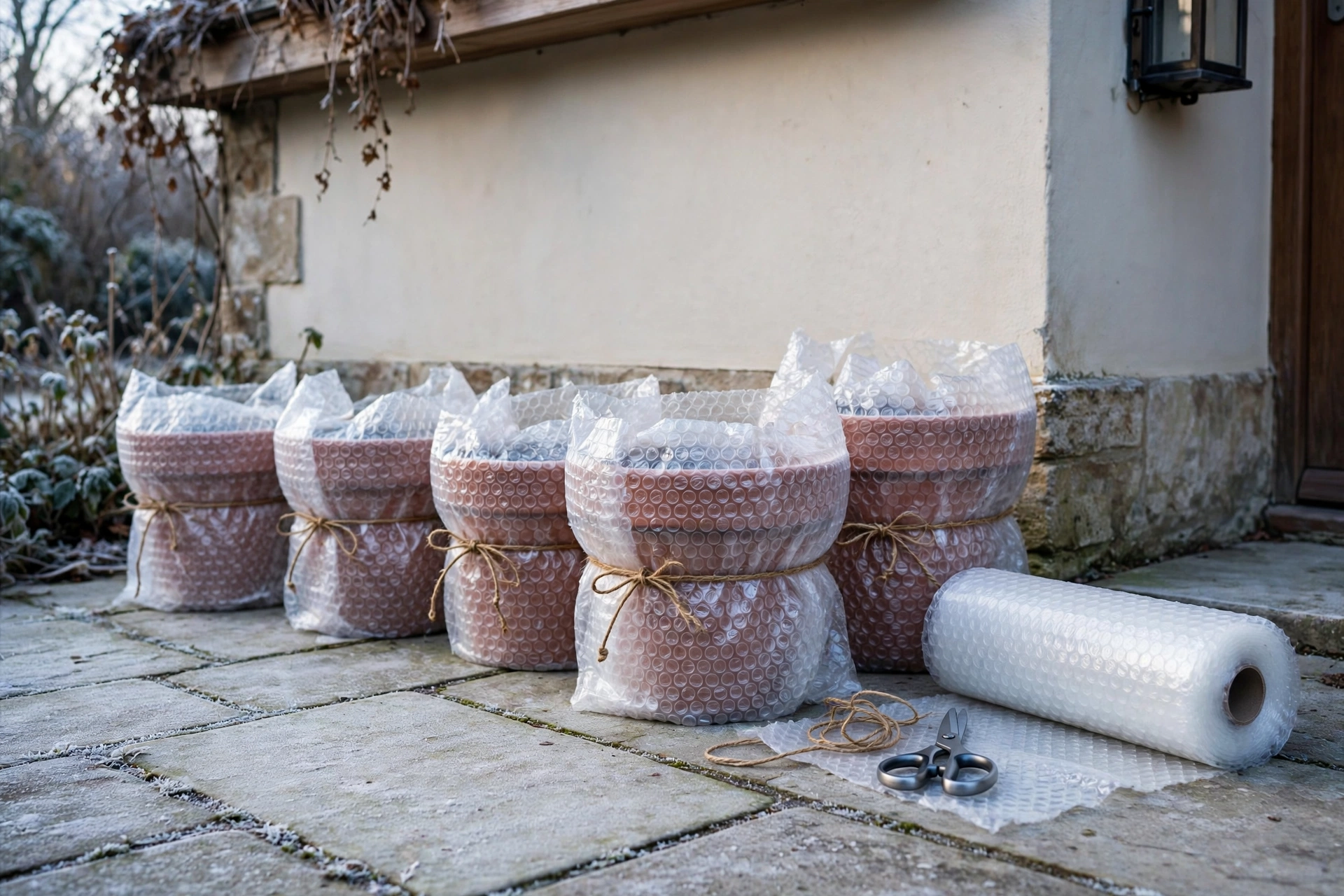
A week-long freeze is a different problem, and the biggest risk moves underground. In a pot, a long freeze can turn the whole root ball solid, and frozen roots kill plants that shrug off cold leaves. So for pots staying outside through a cold spell, wrap the pot itself: bubble wrap is ideal, two layers around the sides, tied with twine, with a little over the top of the compost but not smothering the plant. You are insulating the roots, not wrapping the plant like a parcel. A plant sealed up tight cannot breathe, the air inside goes stale and damp, and rot moves in where frost never got the chance.
Clustered and wrapped, the pots can keep their fleece on through a short spell, but lift it for an hour on any milder day so fresh air gets in and you can check for problems. Water sparingly, only when the compost is dry and only on a morning when it is above freezing, because a pot that goes into a freezing night soaking wet is a pot of ice by morning. And keep telling yourself the spring mantra: most of this is about the roots. Leaves can be replaced. Roots cannot.
Mistakes I have made, so you can skip them
- Covering with plastic. Covered above, worth repeating: plastic on leaves conducts cold and traps condensation. Fleece or fabric, held off the leaves, every time.
- Covering late, over wet foliage. If you throw covers on at 9pm over leaves that are already cold and damp, you trap the worst of it in with the plant. Cover earlier, over dry foliage, while the soil still holds some of the day's warmth to give away.
- Forgetting to uncover. The cover that saves a plant at night can cook it by lunchtime. Put the uncovering in the same mental slot as the covering, or set a phone reminder. I now leave my fleece folded by the back door the night before as a reminder to myself.
- Wrapping a plant like a parcel. Bundling fleece tightly around a shrub, tied up like a parcel, crushes the growth, kills the air gap that does the insulating, and holds wet fabric against the leaves. Tent, not parcel. It is the whole article in three words.
My shortcut: one washing basket by the back door, loaded in autumn with fleece, a ball of twine, a few bricks' worth of patience and the list of my tender plants. When the forecast turns, I am not hunting the shed in the dark. I am just doing the rounds with the basket.
Questions I get asked about cold snaps
How cold is too cold for potted plants?
It depends on the plant far more than the number. Tender plants like basil and citrus start suffering a few degrees above freezing, especially with cold wind, while hardy plants in pots can sit through a light frost untroubled. Roots in a pot feel the cold far sooner than roots in the ground, so when in doubt, treat a pot as if it were one step more tender than the same plant in a border, and move it to the wall.
Can I use an old bedsheet instead of garden fleece?
Yes, happily. Cotton sheets and light blankets make good covers for a night or two, as long as they are held off the leaves on canes and weighed down at the edges. Fleece wins for a long spell because it is lighter when wet and lets a little light through, so plants can stay covered for days. A heavy blanket soaked by rain can squash a small plant flat, so pick your lightest spare.
My plant got frosted anyway. Is it dead?
Probably not, and you will not know for a while, so do not dig it up in a panic. Move pots somewhere sheltered, leave the damaged leaves on as protection, water only lightly, and wait. Many plants that look finished above ground are alive at the crown and will shoot again in spring. The honest test is time: if there is no new growth by mid spring, then it is gone.
When is it safe to move everything back out?
After the last cold night your area usually gets, which is exactly the date that varies most from place to place, so check local advice and your forecast rather than any date I could print here. Even then, harden plants off over a week: out in the day, back under cover at night. A plant that has wintered in a porch and goes straight into a bright cold garden gets a shock it did not need.
Tender list, daytime water, pots to the wall, fleece on canes, covers off in the morning. Half an hour of pottering on a calm evening, and the first frost becomes a non-event. Tell me in the comments what sits at the top of your tender list. Mine is the lemon tree, and it is not close.
Lisa Ben
Lisa paints, builds, thrifts and rearranges her way through one very patient house, then writes down everything she learns here on Wazala. Her garden is small, her lemon tree is spoiled, and her fleece lives in a basket by the back door from October onwards. New projects land every Tuesday, Thursday and Saturday, and the Sunday Letter rounds them up once a week.
You might also like
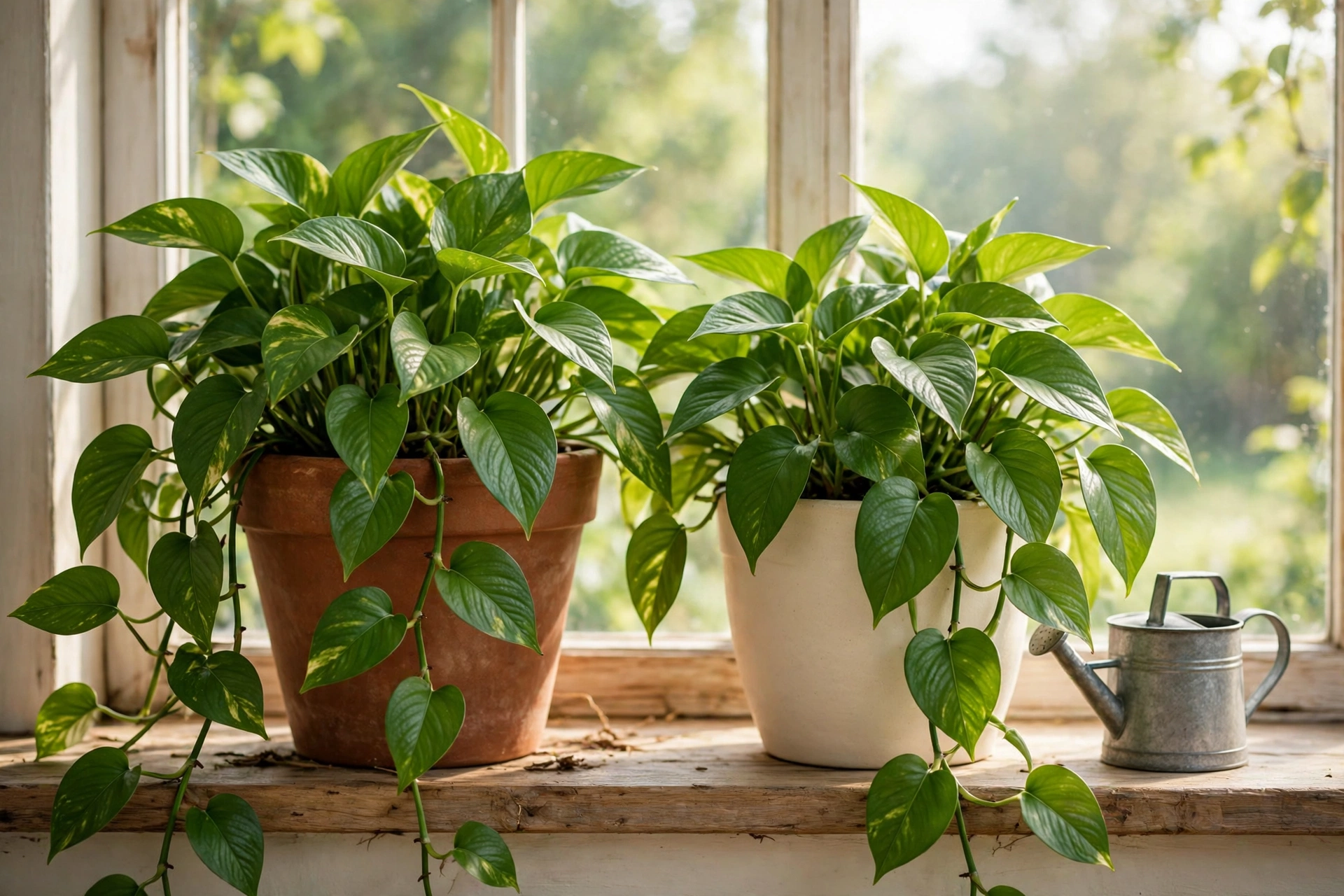
Propagate Pothos: Turn One Plant Into Twelve
Snip, root in water, pot up. The easiest houseplant multiplication you will ever do.
Read more →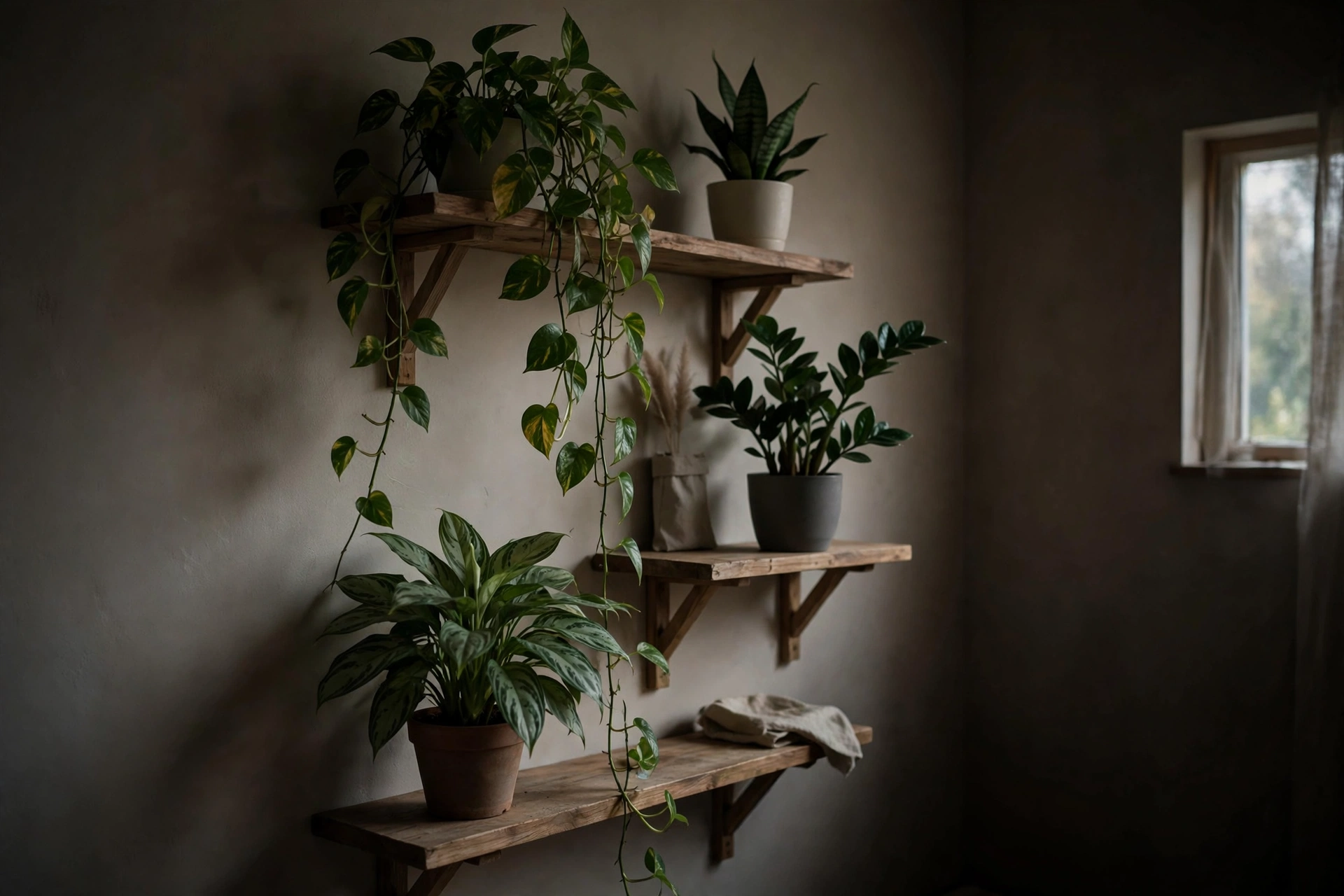
7 Plants That Survive Rooms With Almost No Sun
The honest shortlist for dark hallways and north-facing rooms, tested in my own house.
Read more →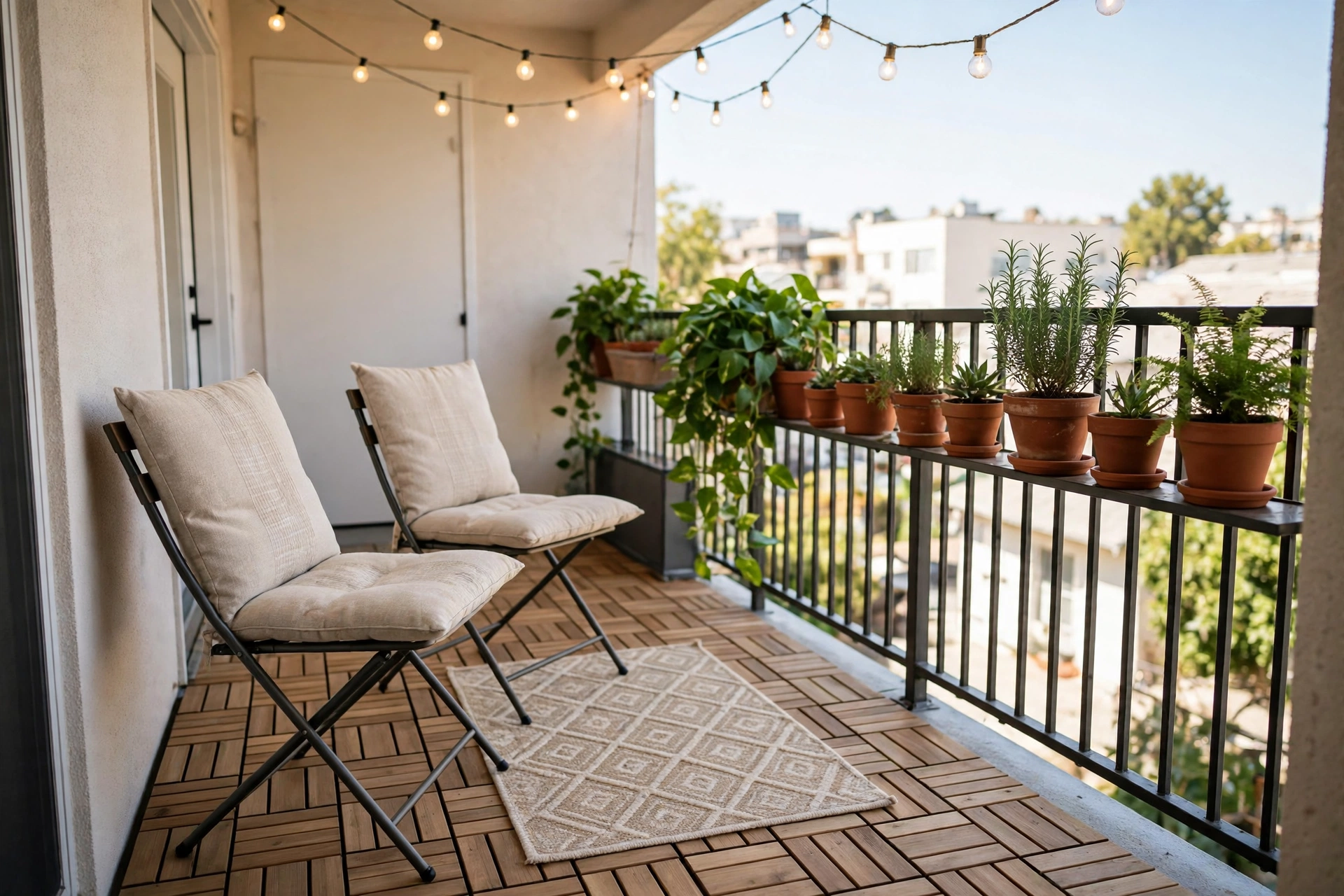
A Small Balcony Makeover On A Shoestring Budget
Pots, lights and one good chair: a rented balcony that finally earns its keep.
Read more →