How To Fit A King Bed In A Small Bedroom
 By Lisa Ben
·
October 15, 2026
·
9 min read
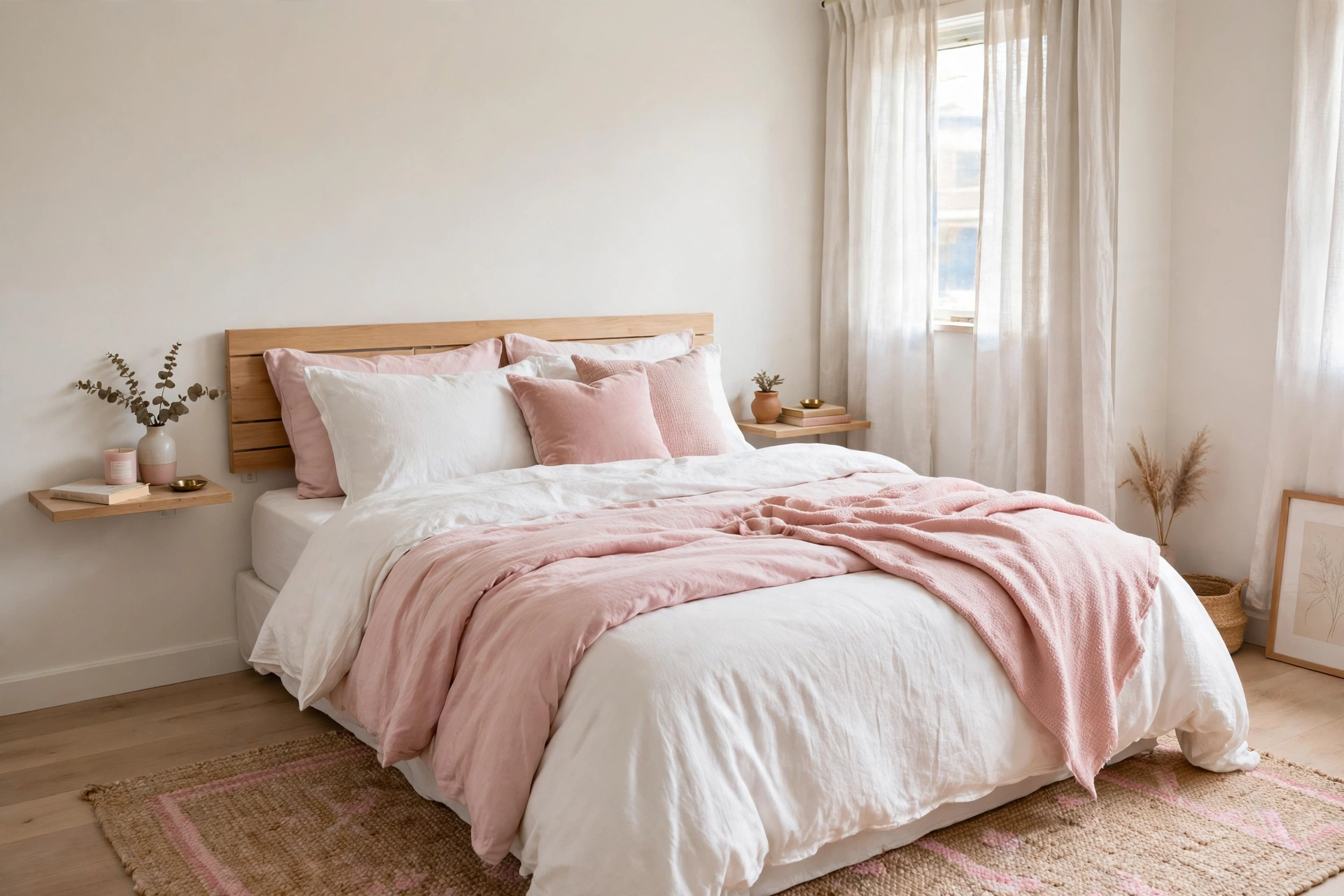
Every couple I know has had the same argument. One of you sleeps diagonally. The other one ends the night clinging to the edge of a double bed like it is a cliff. A king bed fixes the sleeping problem and creates a furniture problem, because in a small bedroom a king leaves about a shoe's width on each side unless you plan it properly.
I am not going to tell you it always works. Sometimes it does not, and I will be honest about that further down. But in most small bedrooms it works fine, provided you measure like a pessimist, shrink everything that is not the bed, and accept that the bed is now the room. Here is the layout that kept our bedside storage and a real walkway.
First, what “king” actually means
Before any maths, a warning: king is not one size. The word means different measurements in different countries, and shops use the label loosely. Here are the standard mattress sizes that hide behind the word.
| Label | Inches | Centimetres |
|---|---|---|
| US King | 76 × 80 in | 193 × 203 cm |
| UK King | 59 × 78 in | 150 × 200 cm |
| UK Super King | 72 × 78 in | 180 × 200 cm |
Look at that gap. A US king is 43 cm wider than a UK king. That is the difference between a room that works and a room you climb across. So forget the label entirely. Measure the bed you own, or the exact bed you plan to buy, frame included, because frames often add 5 to 10 cm beyond the mattress on every side. Those are the numbers that matter. Everything below uses your measurements, not the word on the tag.
Measure the room like you mean it
Start with the room itself, wall to wall, and then subtract the things people forget. Skirting boards steal a centimetre or two on each side. A radiator on the bed wall pushes the whole bed forward by its depth, plus the gap you need so bedding does not rest against a hot panel all winter. Then the movers: how far does the bedroom door swing into the room? Do the wardrobe doors open out into the space the bed wants? A wardrobe you cannot fully open is a wardrobe you will stop using properly within a month.
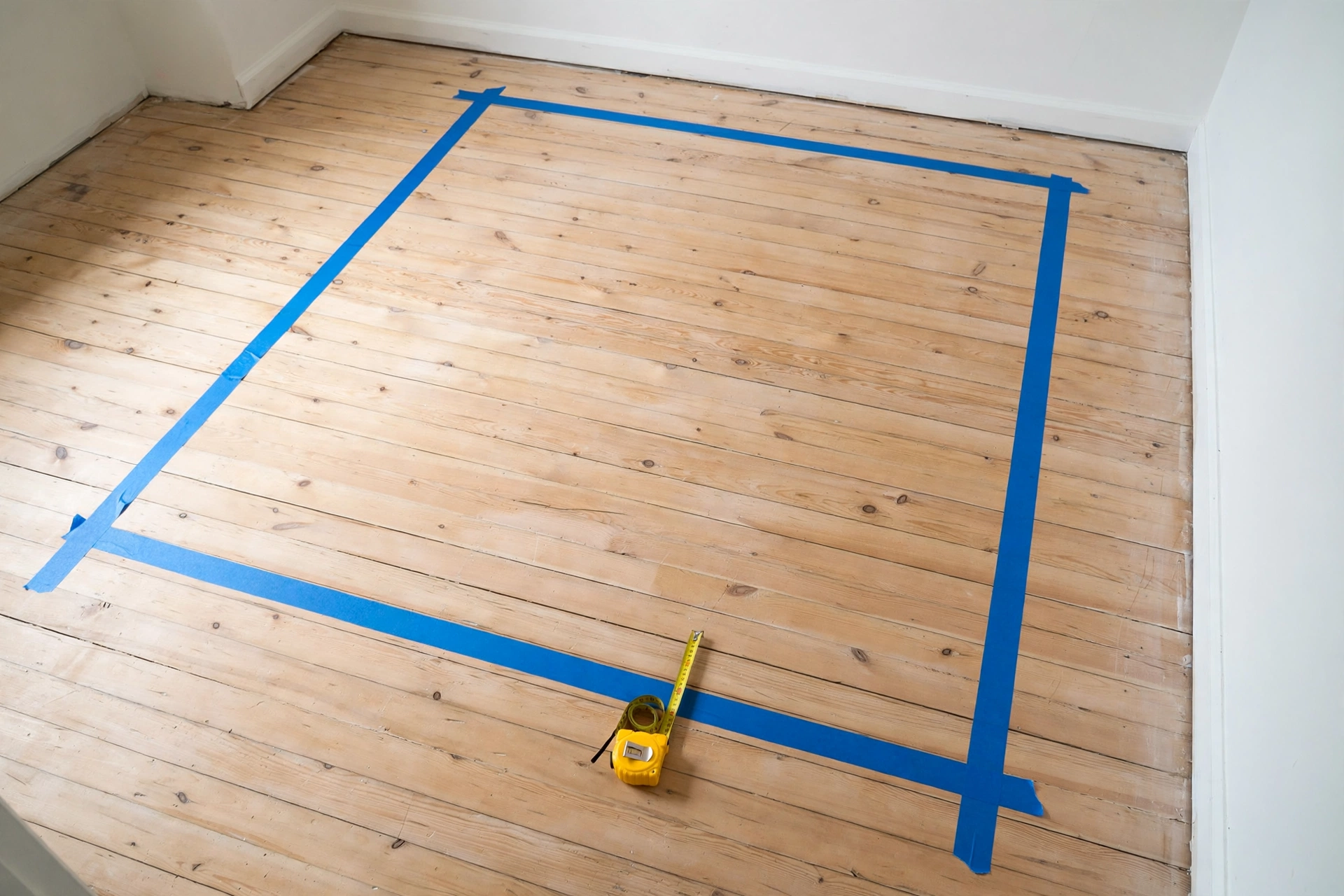
Write the honest leftover space down. Then do the single best test I know, the one that has saved me from two bad furniture decisions: tape the outline of the bed on the floor. Masking tape, full size, frame dimensions not mattress dimensions. Leave it there for a full day. Walk around it in the morning half asleep. Open every door. Get dressed beside it. You will know by bedtime whether the room can carry it, and you will know in your feet, not in a spreadsheet.
The walkway maths
Here are the numbers I plan around, learned from living with the tight version. Around 60 cm of clear space at the sides and foot of the bed is comfortable: you walk normally, changing the sheets is no drama, and a laundry basket fits past. Around 45 cm is a squeeze, but a liveable one. You turn slightly, you shuffle a bit with the fitted sheet, and you get used to it within a week. Below that, let us say it plainly: you are shuffling sideways like a crab, every day, forever. It stops being charming by the second week.
The sides matter more than the foot. Most people can give up foot space, because you only pass the end of the bed. The sides are where you climb in, make the bed, and reach the wardrobe at 7am. If something has to give, take it from the foot of the bed first.
The layout rules that make it work
Rule one: the bed goes centred on the longest wall. Centred is not fussiness, it is maths: it splits the leftover space into two equal walkways instead of one generous one and one useless sliver. Rule two: if one side does have to be tight, choose which side on purpose. Make it the side of the person who minds least, or who gets up less often in the night. In our house that is me on both counts, so my side is the shuffle side and I genuinely stopped noticing within a fortnight. Rule three: whatever the tape says, never block the door swing. A door that bounces off the bed frame at 3am will end the experiment faster than any tight walkway.
Shrink everything that is not the bed
The bed has claimed its territory. Everything else has to earn a smaller footprint. Start at the sides: full bedside tables are usually the first casualty, and honestly, good riddance. A wall-mounted shelf at mattress height holds a book, a phone and a glass of water, which is all a bedside table ever really held. You gain back the floor, and the room looks bigger because you can see it.
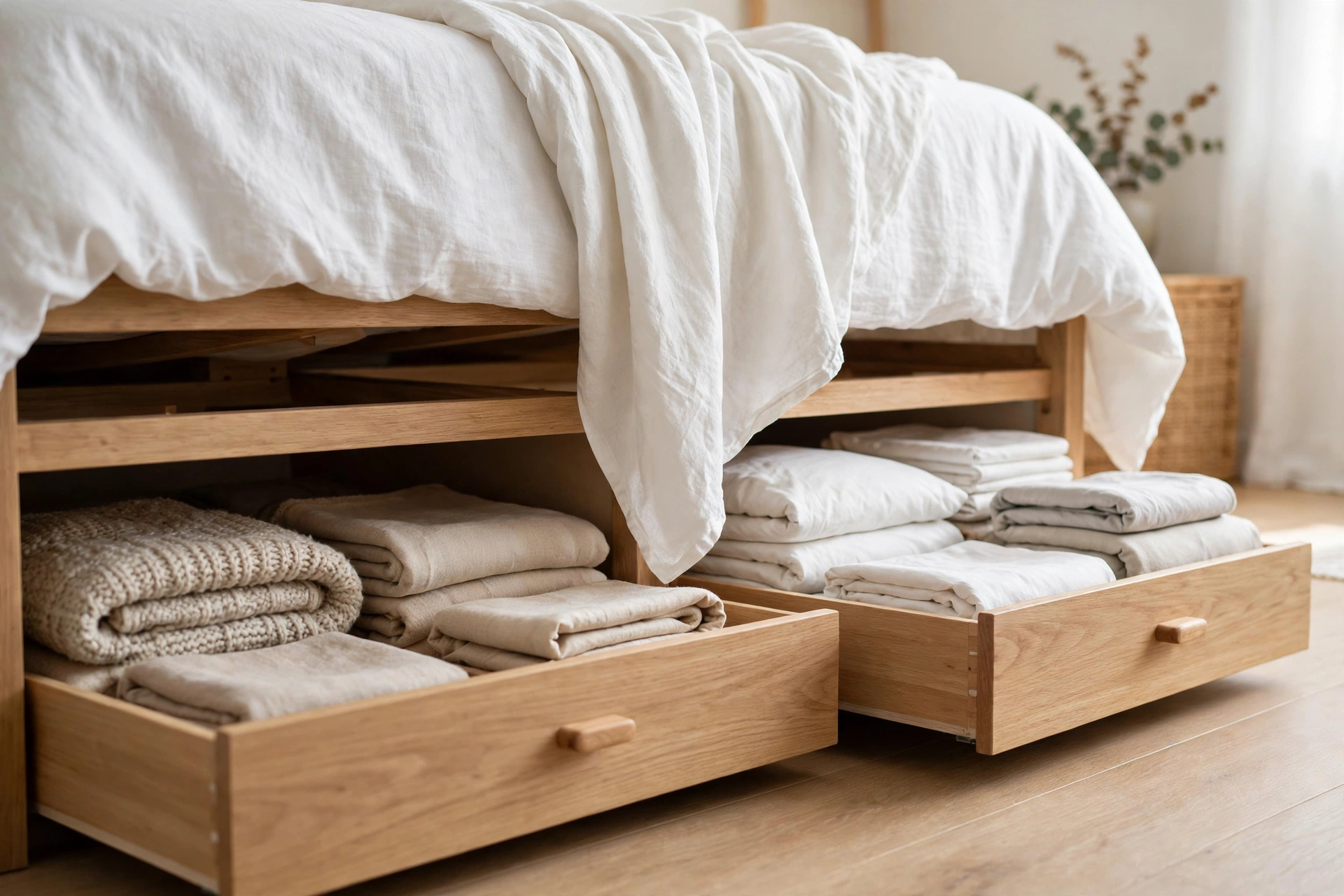
The headboard is the second quiet thief. A chunky upholstered headboard can eat 10 to 15 cm of length. A low, slim one, a wall-mounted cushion, or no headboard at all with the wall painted behind the bed gives you that length back for the foot walkway. Then look under the bed: drawers under the frame hold the spare bedding and out-of-season clothes that would otherwise need a dresser, and a dresser is a huge thing to remove from a small room. Finally, if the wardrobe is being replaced, sliding doors beat hinged ones every time in a tight room, because they need zero swing space.
Tricks that keep the room calm
A big bed in a small room can look like a raft in a pond. A few visual tricks calm it down. Keep the bedding light in colour: white or pale bedding reads as air, dark bedding reads as mass. Choose a bed frame with legs, so the floor shows underneath and your eye travels under the bed instead of stopping at it. Run one rug under the lower two thirds of the bed, sticking out at the foot and sides, which ties the bed to the room instead of parking it there. And hang curtains high, close to the ceiling, even in a bedroom: the vertical line makes the walls look taller, which buys back some of the spaciousness the bed took.
The honest bit: making the bed
Nobody warns you about this part. With tight sides, changing a king fitted sheet is a workout. The trick is order: start at the far, tight corner, the awkward one, and work towards yourself. Hook the two hard corners first while the sheet is loose, then the easy ones. I also pull the mattress a few centimetres towards me on the tight side, fit the sheet, and push it back. And the honest housekeeping note: on the shuffle side, the bed will not get hospital-corner tidy every day, because you cannot stand where you would need to stand. A throw over the foot of the bed hides a multitude of sins and takes four seconds.
My shortcut: if making the bed is a daily fight, switch to a duvet a size up from the bed. The extra drape hangs over both tight sides, looks generous, and you barely need to tuck anything at all.
When to admit defeat
Here is the honest paragraph. If your tape test leaves under about 40 cm on both sides, and the door still clips the outline, the king does not fit your room. It fits your wishes, which is not the same thing. A queen or a double that you can walk around, make easily and open every door against is the better bed, full stop. A smaller bed you can move around beats a king you have to climb over, because you will climb over it ten thousand times and sleep in it the same number, and the climbing is what you will remember.
Mistakes I see (and nearly made)
- Measuring the room but not the delivery path. The most expensive mistake of all. The bed also has to travel: through the front door, up the stairs, round the landing turn, through the bedroom doorway. A king base that fits the room perfectly and cannot turn on the stairs fits nowhere. Measure the whole route, or order a split base.
- Buying the bedside tables first. Standard tables are 40 to 50 cm wide each. Two of them can quietly eat a metre of your width before the bed even arrives. Bed first, sides last, shelves if needed.
- The thick headboard. A deep padded headboard is lovely in a showroom and steals up to 15 cm of your room's length forever. In a small room, that length belongs to your feet, not your pillows.
- Trusting the word “king”. As the table above shows, that word covers a 43 cm range of widths. Measure the actual bed, frame and all.
Questions I get asked about king beds in small rooms
What is the smallest room a king bed can fit in?
Work backwards from the bed. Take your bed's real width, add at least 45 cm each side, and that is your minimum wall-to-wall width. For a UK king at 150 cm wide, that means a room around 2.4 m wide at the bed wall, and more is kinder. Length works the same way: bed length plus 45 to 60 cm at the foot.
Can I push the bed against one wall to gain space?
You can, and for a single sleeper it works well. For two people it means one of you climbs over the other to get out, and making the bed becomes a two-person job against the wall. Most couples try it for a month and centre the bed again. If you do it, put the wall side sleeper as the one who gets up least.
Will a king bed make my small room look smaller?
The bed itself will dominate, yes, but light bedding, a leggy frame, a rug under the lower two thirds and curtains hung high keep it looking calm rather than crammed. What actually makes the room look smaller is extra furniture fighting the bed. One big piece plus breathing room beats five medium pieces.
Is a split base worth it for a king?
In a house with a tight staircase, absolutely. Two half bases turn corners that one full base never will, and they join solidly once they are in the room. Check the delivery route before you order, not while the driver is standing on your landing.
So: measure the bed, not the label. Tape it on the floor and live with the outline for a day. Shrink the furniture, not the walkway. Do that, and the king usually fits, and your diagonal-sleeping partner can finally have their half. Tell me in the comments what your tape test left you on each side, and I will tell you honestly whether I would go for it.
Lisa Ben
Lisa paints, builds, thrifts and rearranges her way through one very patient house, then writes down everything she learns here on Wazala. Small rooms are her favourite puzzle. New projects land every Tuesday, Thursday and Saturday, and the Sunday Letter rounds them up once a week.
You might also like
Small Living Room Layouts: 6 Arrangements For Tight Spaces
Six layouts that seat real people in rooms that measure small, sofas measured honestly.
Read more →
Small Closet, Sorted: The Two-Hour Edit
The two-hour edit that turns a bursting small closet into one you can actually use.
Read more →
A Small Balcony Makeover On A Shoestring Budget
A tiny balcony, a tiny budget, and the order of jobs that made the biggest difference.
Read more →